RAG is only useful when
the data isn't a mess.
The grounding layer for Leena AI Colleagues. Connects your sources, surfaces contradictions,
tests answers, monitors health - so the AI on top is accurate, not just running.
The problem isn't doing RAG.
It's the mess underneath.
RAG doesn't crash on dirty data. It quietly lies. We made that a technology problem
instead of a year-long consulting engagement.
The 14-month consulting engagement

Manual SharePoint audits
Spreadsheet permissions mapping
Quarterly stale-content reviews
UAT as a fire drill before launch
Annual re-permissioning project
Garbage in, garbage out — at scale
A platform that runs itself

Conflict Analysis surfaces contradictions
Smart Testing catches broken answers
Health Dashboard surfaces stale, expiring, mis-permissioned, parsing-failed content
Path-Based Access Control reuses your folder structure
Permissions inherited automatically
UAT is a live dashboard
Six things, in order.
Indexing is step three.
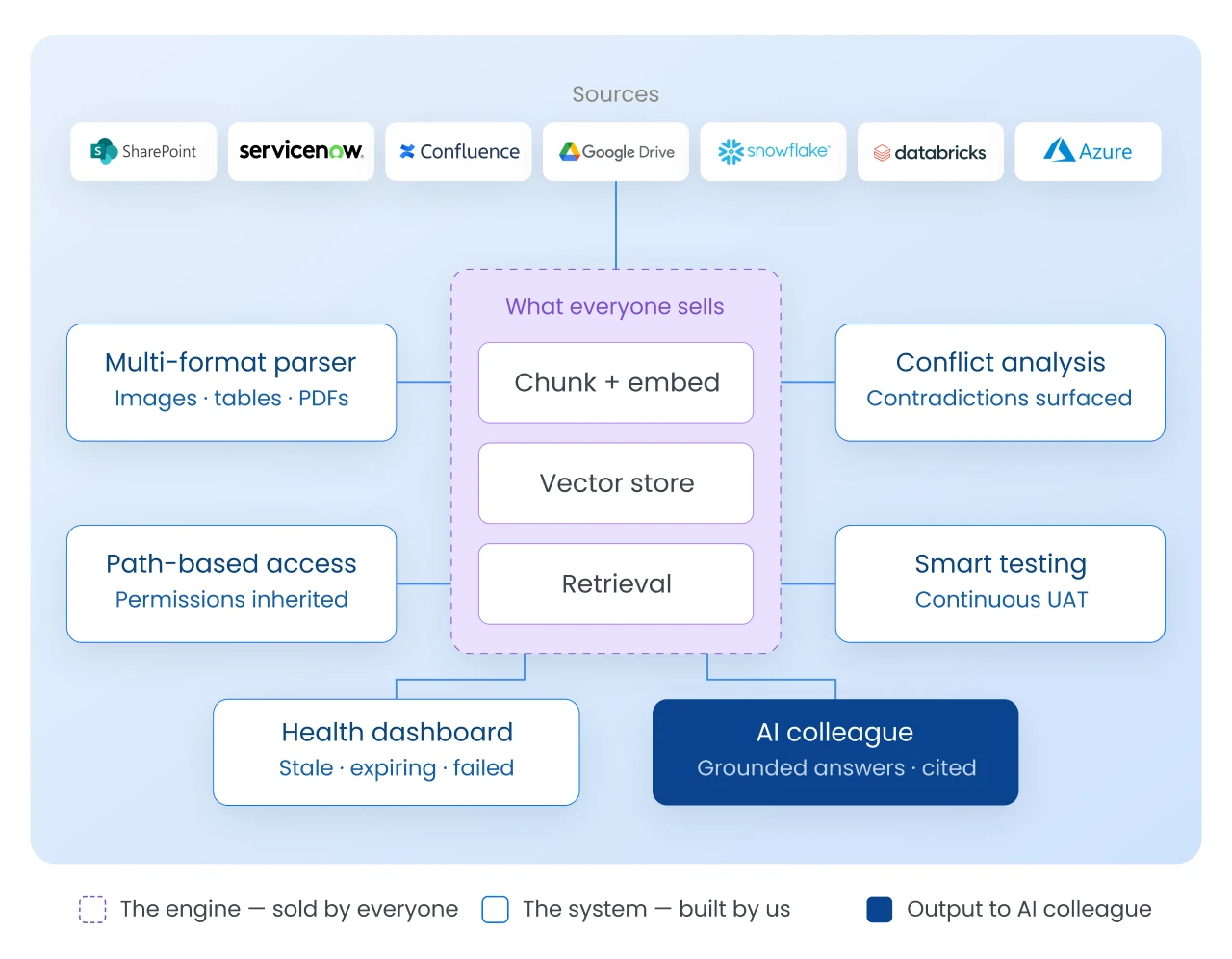
Most ‘knowledge layers’ stop at indexing. That's the engine, not the system. Here's the full flow that
takes raw enterprise content and makes it safe behind an AI Colleague.

Connect to every source
SharePoint, ServiceNow, Drive, Snowflake, Databricks, S3, the open web. Synced centrally.

Parse what others drop
Images, tables, code, PDF structure. Most retrieval systems drop these. We don't.

Index with permissions
Chunked, embedded, indexed. Source permissions inherited. No parallel ACL.

Conflict analysis
Flags contradictions across documents before users hit them. Up to 1,000 articles per scan.

Smart testing
Generates questions, asks your AI Colleague, grades the answers. Continuously.

Health Dashboard
Stale, expiring, low-confidence, failed — all live, in one place.
Everywhere
else, you buy the middle.
We sell the system that wraps it. The engine comes with it.
Six things wikis, vector DBs,
and bolt-on RAG kits don't do.
A quarterly audit, running continuously.
Stale, expiring, conflicting, low-confidence, parse-failed, sync-failed - all in one place, live. The audit never stops.
Find contradictions before users do.
Reads across documents, flags conflicts, shows the reasoning side by side. Up to 1,000 articles per scan.
The passage. Not the document.
Others surface three relevant links. We point to the paragraph the answer came from. Verification in seconds, not minutes.
Permissions inherited, not reimplemented.
Reads your folder structure and applies rules at retrieval. Stamp documents with attributes — country, role, function. No parallel ACL.
UAT as a dashboard, not a fire drill.
An LLM generates questions, asks your bot, grades the answers on accuracy, completeness, relevance. Continuously. Before users see anything.
Reads what others silently drop.
Images. Tables. Code. PDF structure. Most systems miss it. We don't - so the model sees what your authors actually wrote.













Inside the Agentic AI architecture
Touchpoints
Your people work in Teams, Slack, email, voice, browsers, portals. AI Colleagues show up there. Not somewhere else.
 8+ channels. Zero context switching.Same agent, same memory, every surfaceTalks back. Reaches out. Doesn't wait to be asked.
Orchestrator
The brain. Reads the request, builds the plan, calls the right AI Colleague, routes between models on the fly. Model-agnostic by design - runs on Claude Opus 4.8, WorkLM™️, GPT 5.5, Llama 4, or Gemini 3.5.
Plans are built, not pre-codedBreaks complex asks into doable subtasksHands off cleanly between agents over A2AAI Colleagues
Level 3 digital workers, each grounded by Agent Operating Protocols (AOPs), equipped with Tools to act in enterprise apps, powered by Context Graph and Memory, and managed via a Workbench.
Always on. 24/7. No human trigger.Gets smarter with every interaction via the Context GraphHandle exceptions like a person would. No "I didn't understand."Studios
Three no-code studios that let business users design, assemble, and ground AI Colleagues in plain English. AOP Studio writes the process. Workflow Studio wires in the tools. Knowledge Studio connects the truth.
Kickoff to live in days, not monthsBusiness users own and iterate without engineering1000+ pre-built tools across 200+ enterprise systemsPermissions and Access Controls
AI Colleagues only see and do what their role allows - across every system you connect. Permissions stay tied to your existing tools.
Inherits from your IdP. No re-mapping.Every action audit-logged and identity-boundSafe for multi-team, multi-tenant deploymentsIntegrations
200+ pre-built enterprise connectors across ServiceNow, Workday, SAP, Oracle, Salesforce, UKG, SharePoint, Snowflake, and more — via APIs, MCP, A2A, and browser/RPA.
200+ live on day oneConnect in minutes, no custom codeAPI + RPA + browser fallback. Nothing's "we can't integrate."Observability and Governance
Responsible AI layer, built into every AI Colleague. See every step, govern every action. Dashboards for execs, ops, and risk.
Full trace: what the agent did, why, what it readGuardrails at every layer - enforced before executionEval Suite catches regressions. Quality trends up, not sidewaysTrust and Security
Agentic AI security built into the architecture, not bolted on. SOC 2, ISO 27001, HIPAA, AES-256-GCM.
AES-256 at rest, TLS 1.2+ in transit, AWS KMS-managed keysShared, single-tenant, or private VPC across 14+ regionsSSO, MFA, and RBAC for staff and customer adminsPick your next stop
Hand-picked next reads — short on filler, long on what matters.
Workflow Studio
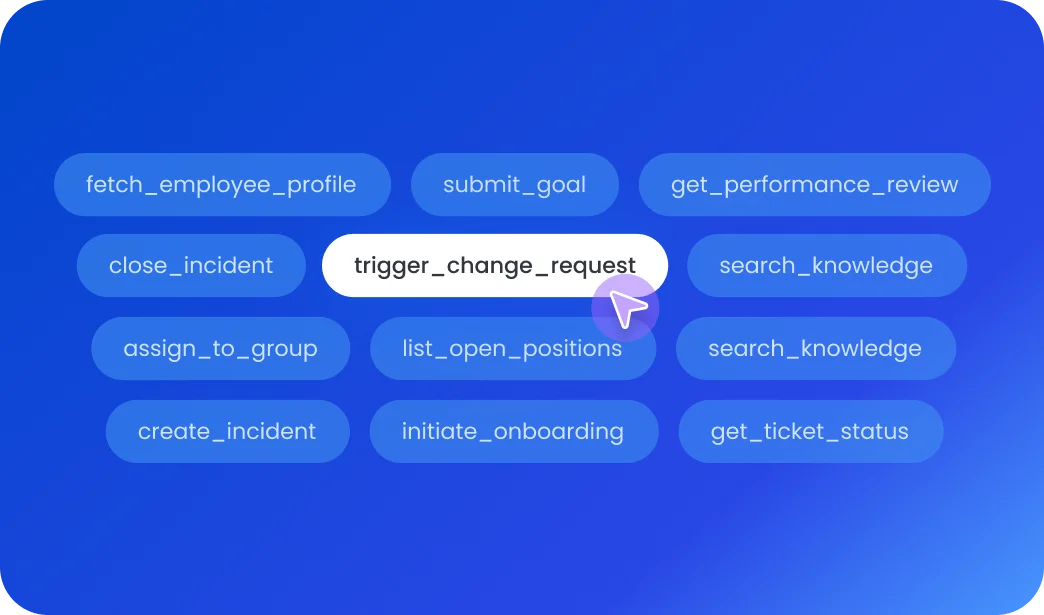
1000+ pre-built tools across 200+ enterprise systems. Auto-bound to AOPs, deterministic by design.
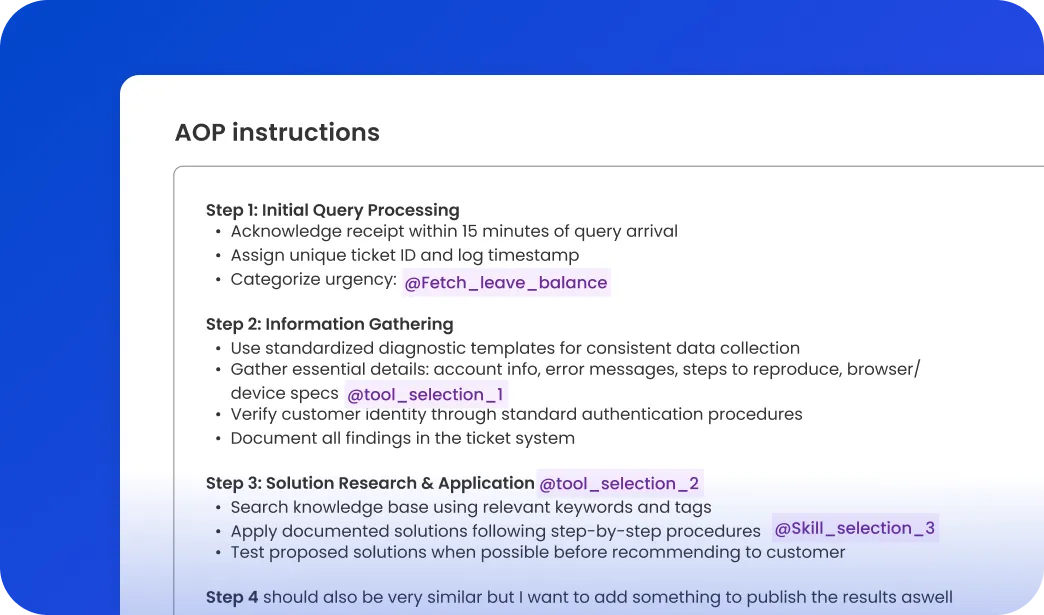
AOP Studio
AOPs are SOPs for AI Colleagues. The playbook they execute on - written in plain english.
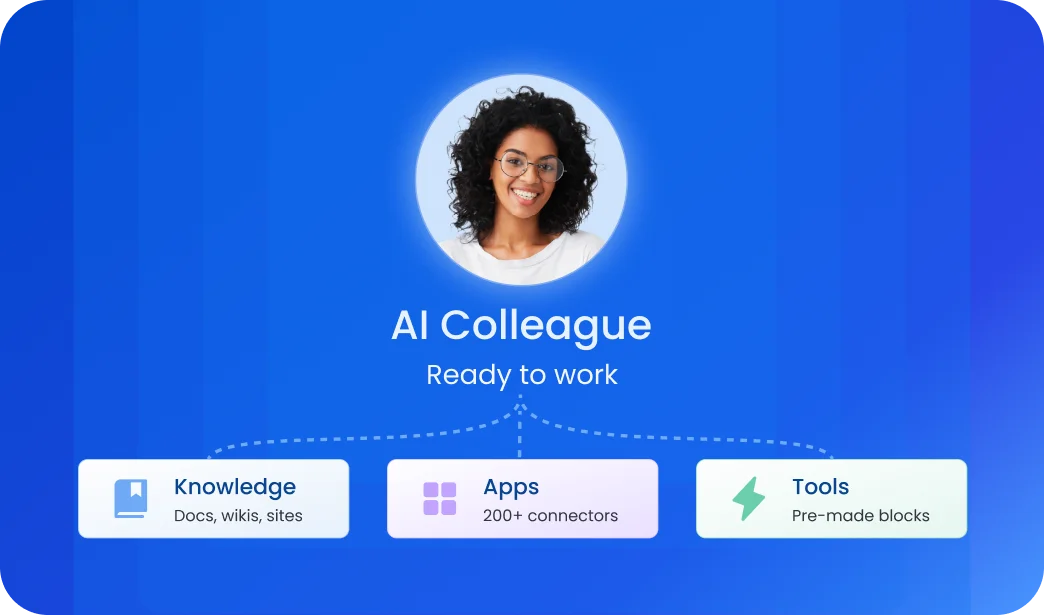
AI Colleagues Platform
Describe the work. Wire the tools. Plug in your stack. Go from kickoff to live in days, not quarters.
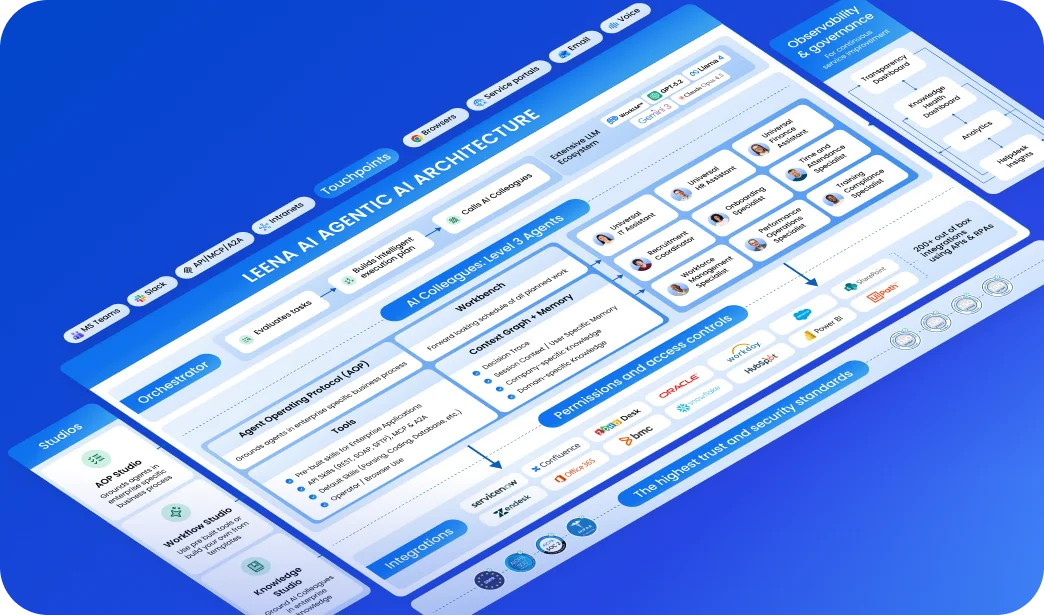
Agentic AI Architecture
The platform Fortune 500s use to build, govern, and run enterprise AI Colleagues.
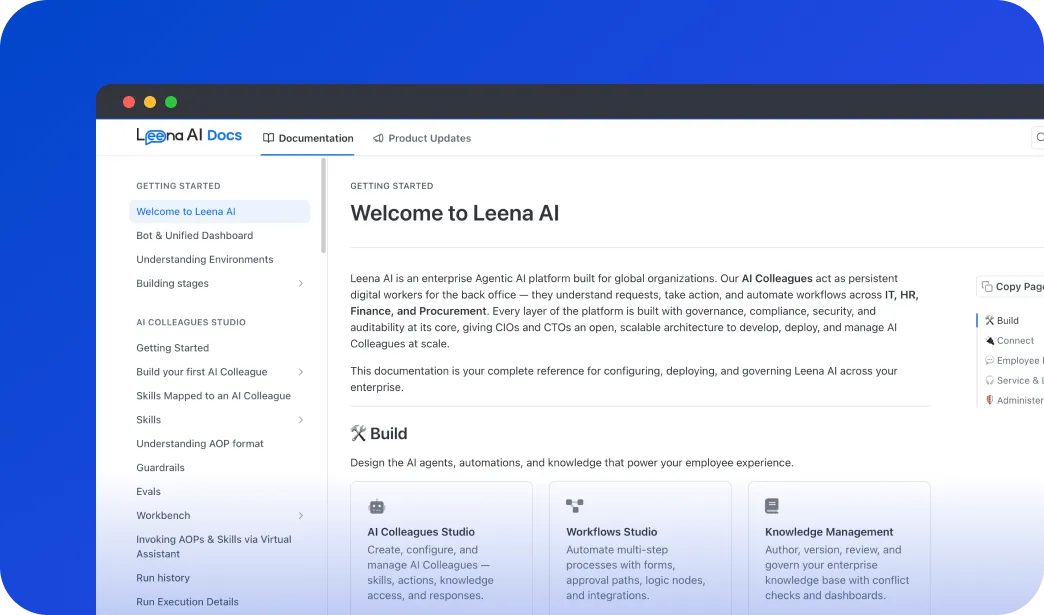
Leena AI Documentation
Your reference for configuring, deploying, and managing AI Colleagues at scale.
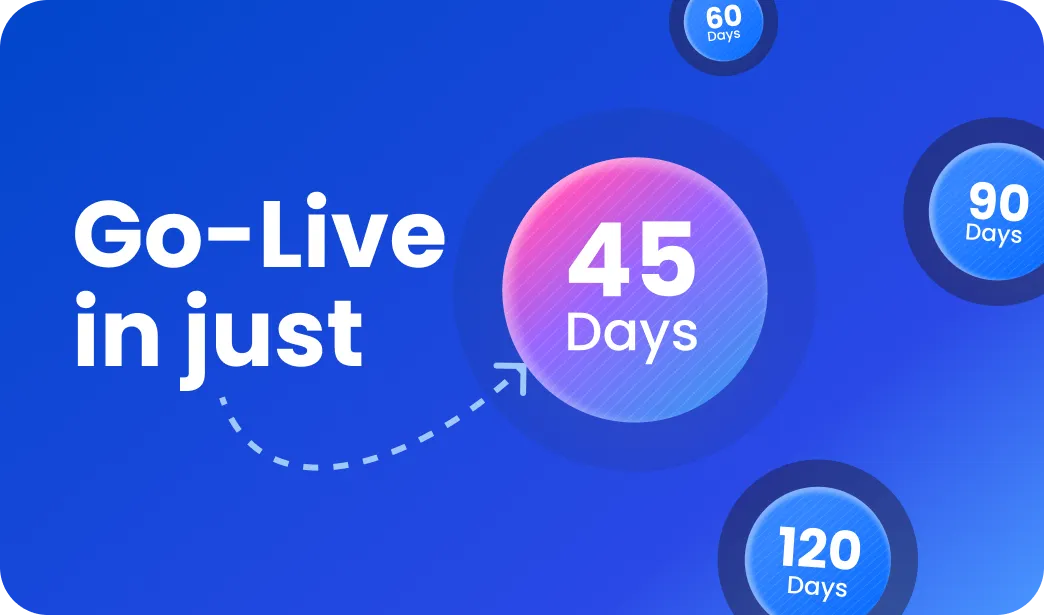
45-Day Go-Live
Pre-built. Pre-integrated. Pre-trained. Enterprise- wide AI Colleagues live in days, not months.
Frequently asked questions
What is Leena AI Knowledge Studio?

How is this different from a vector database or a standard RAG stack?
Which enterprise systems does Knowledge Studio connect to?
How does Knowledge Studio handle permissions?
How fast can we deploy?
What does Conflict Analysis actually do?
How does Smart Testing work?
Does it extract content from images and tables inside PDFs?
What does the Knowledge Health Dashboard show?
Do we need to clean our data first?