What is Agentic AI and how is it different from traditional AI chatbots?
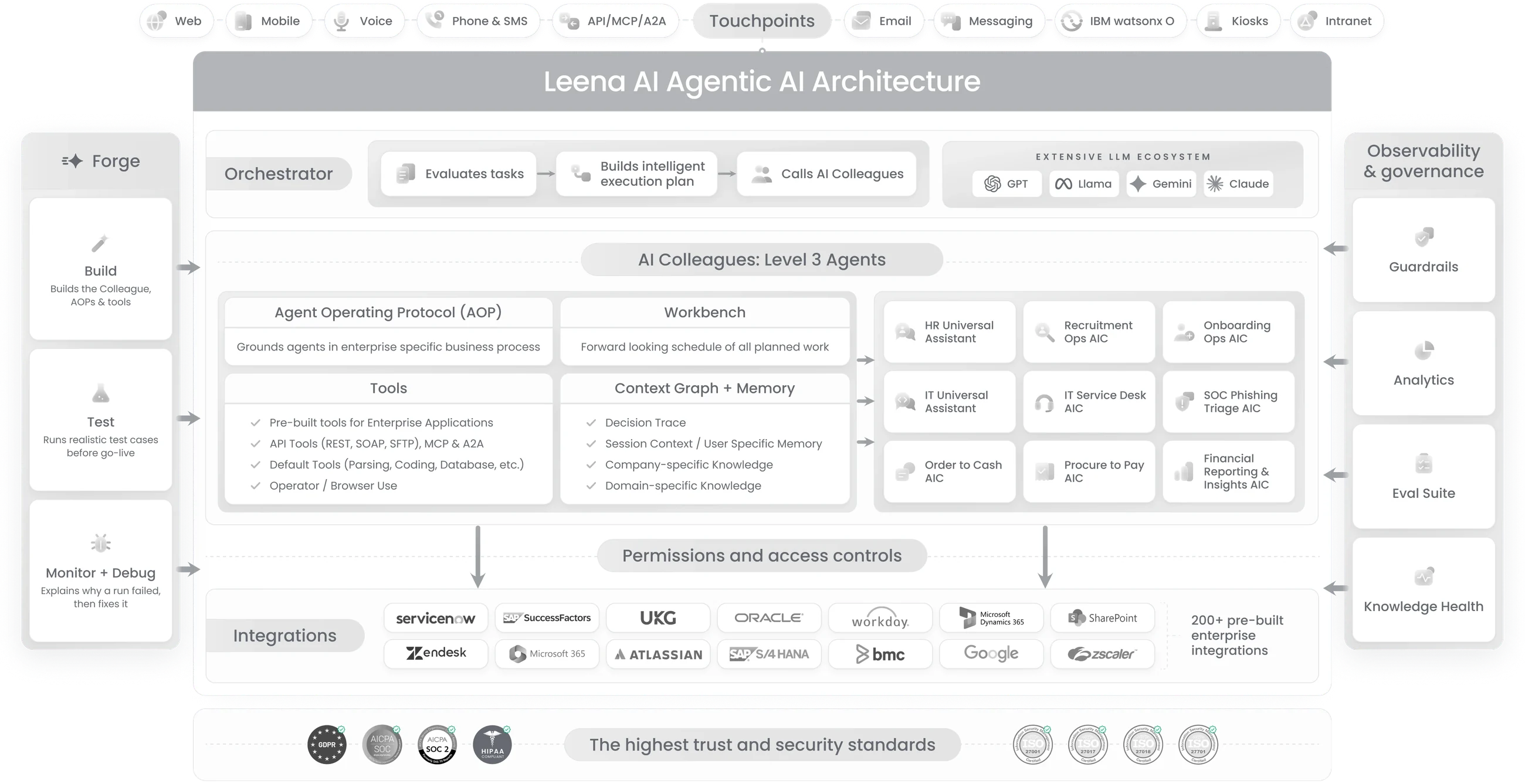
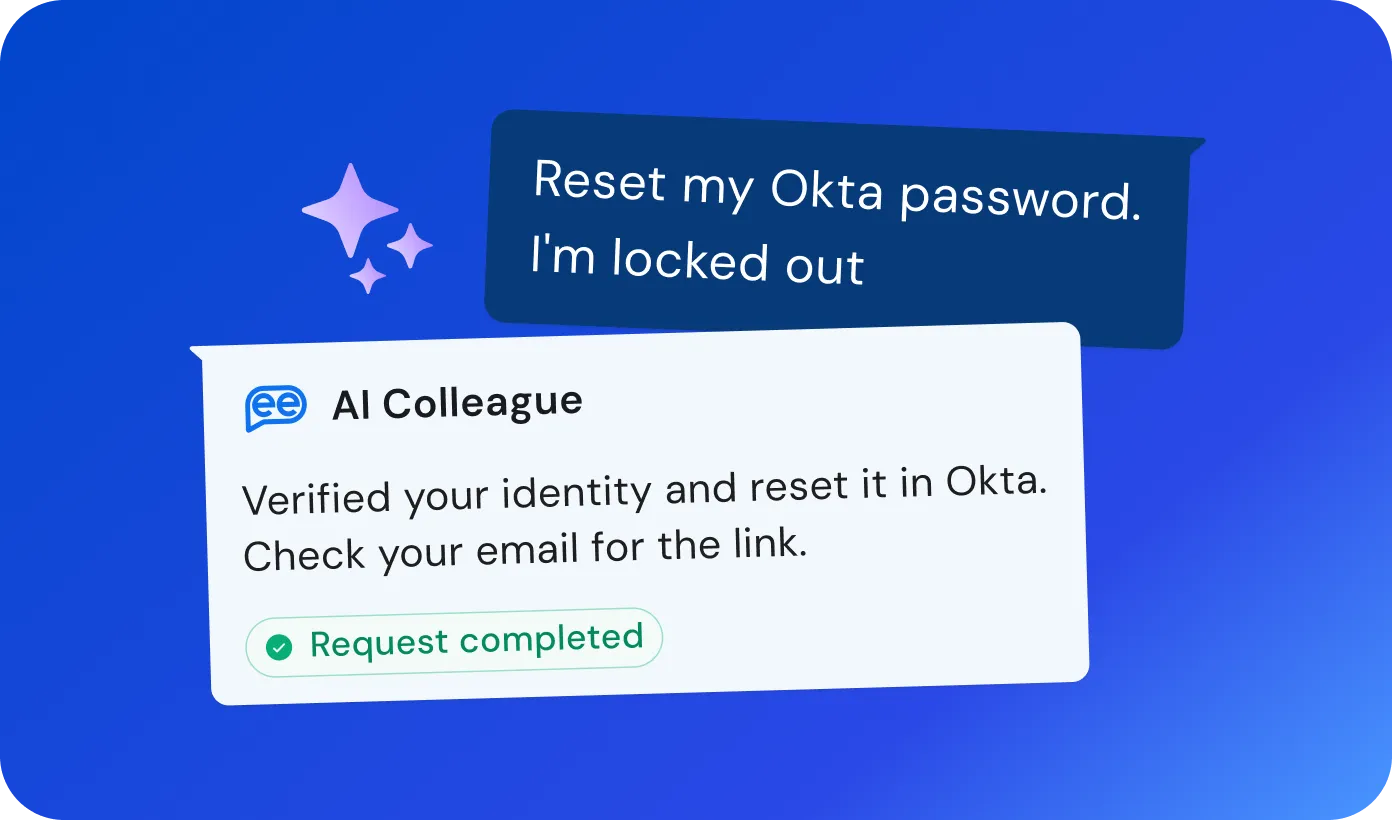
Agentic AI refers to autonomous AI systems that can plan, reason and execute multi-step business processes with human-like agency, not just answer questions. Unlike traditional chatbots that respond to single prompts, Agentic AI like Leena AI’s AI Colleagues persist across time, take actions in enterprise applications, handle exceptions and complete end-to-end workflows independently.
What is an AI Colleague?
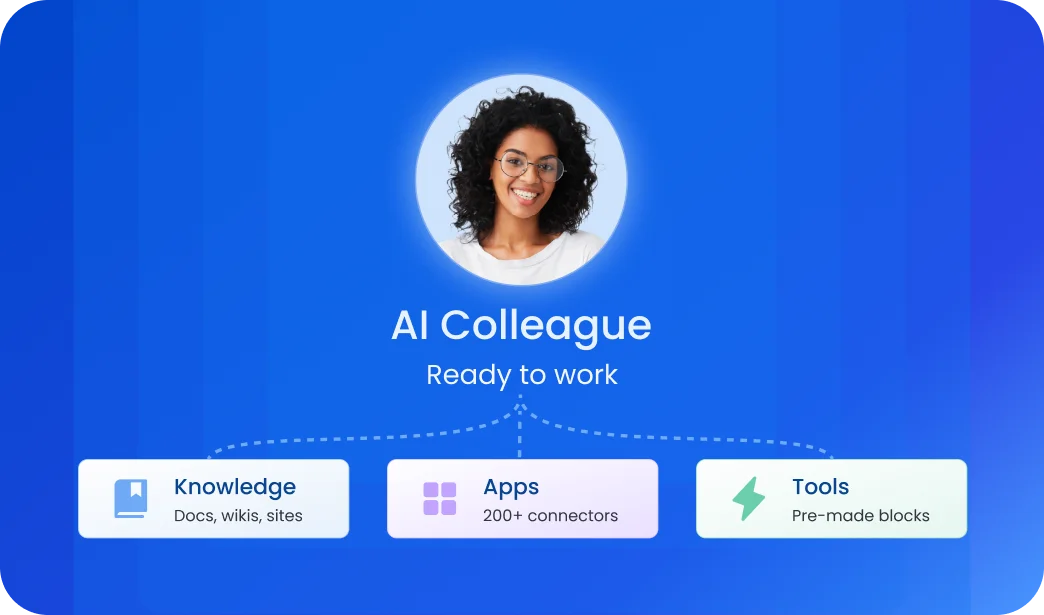
An AI Colleague is a persistent digital worker assigned a specific job role, like IT Operations Coordinator, HR Operations Specialist or Finance Operations Analyst. Each AI Colleague has a defined identity, follows Agent Operating Protocols (AOPs), executes tools across enterprise apps, builds memory over time and escalates edge cases to a human manager.
What is an Agent Operating Protocol (AOP)?
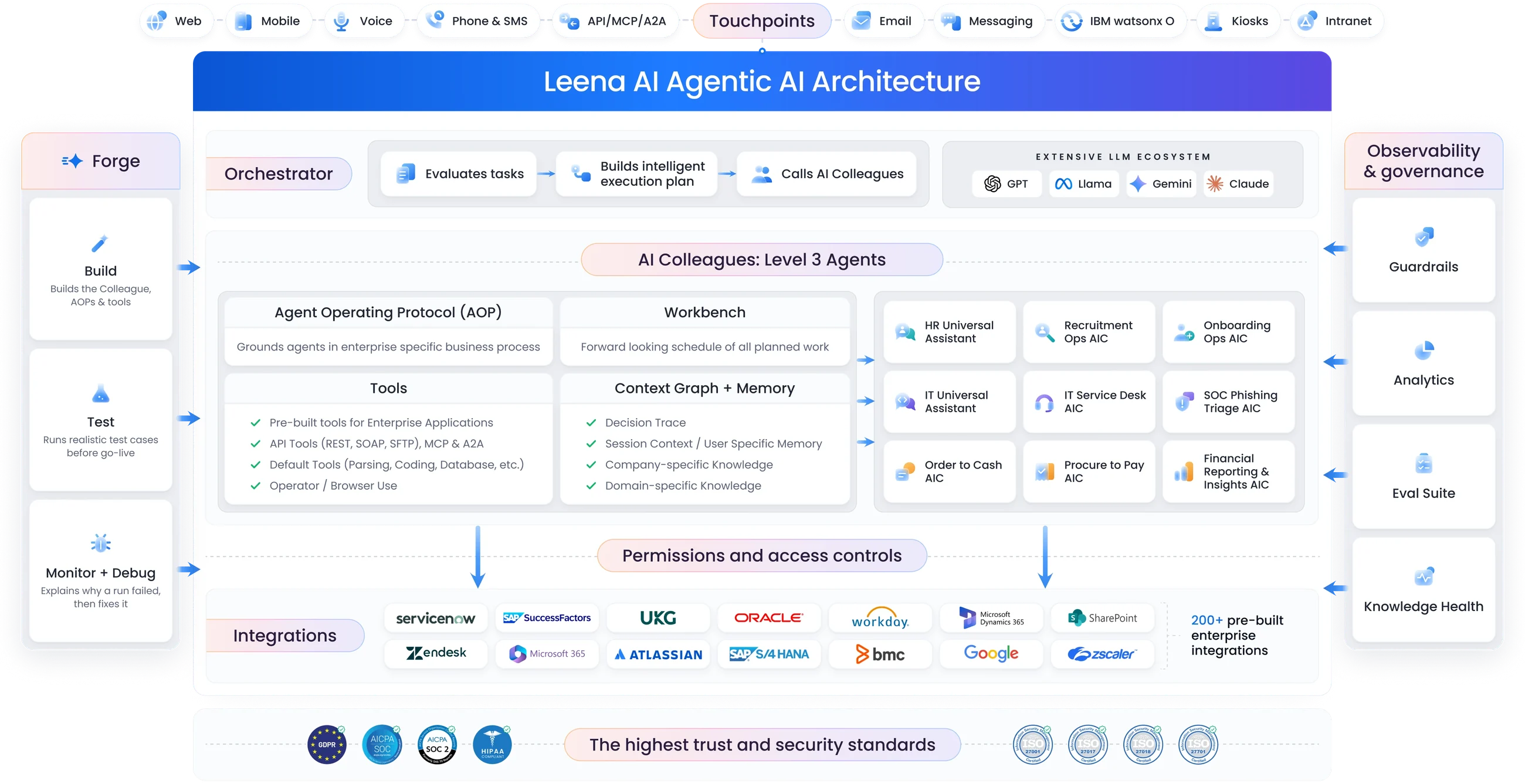
An AOP is to AI Colleagues what a Standard Operating Procedure (SOP) is to humans: a business process blueprint written in plain English that grounds AI Colleagues in your company’s actual workflows. Business users can create AOPs by uploading existing SOPs, describing processes conversationally or referencing company-specific rules, with no coding required.
What is Leena AI Forge?
Leena AI Forge is how you build your own AI Colleagues. Describe the process in plain English and Forge builds the Colleague, its AOPs and tools, runs realistic test cases before go-live, and monitors every run, explaining why a run failed and proposing the fix.
How does Leena AI’s Orchestrator work?
The Orchestrator is the central planning engine. It evaluates incoming requests from any touchpoint, breaks them into smaller tasks, builds an intelligent execution plan and dispatches work to the right AI Colleagues. It is model-agnostic, using multiple LLMs including Leena’s proprietary WorkLM™, GPT, Claude, Gemini and Llama, and picks the best model for each task.
What is WorkLM™ and why does it matter for enterprise AI?
WorkLM™ is Leena AI’s proprietary large language model, fine-tuned on 10M+ proprietary synthetic data points to understand enterprise business processes. Unlike consumer-grade LLMs, WorkLM™ understands real workflows, for example that a Purchase Requisition (PR) typically precedes a Purchase Order (PO), making it more reliable for enterprise automation.
How quickly can an AI Colleague go live?
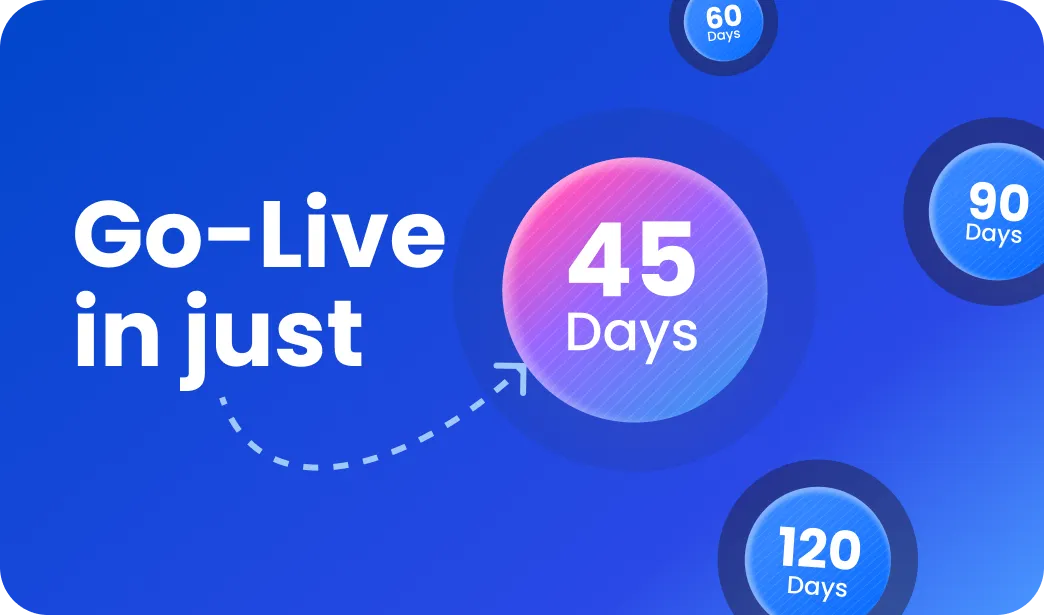
AI Colleagues can go live in days, not months. Plug in your existing knowledge sources (SharePoint, Confluence, ServiceNow and more), switch on application connectors with pre-built integrations across 200+ enterprise systems, and drag in pre-built tools from the Tool Registry. No migration projects, no custom code.
What enterprise applications does Leena AI integrate with?
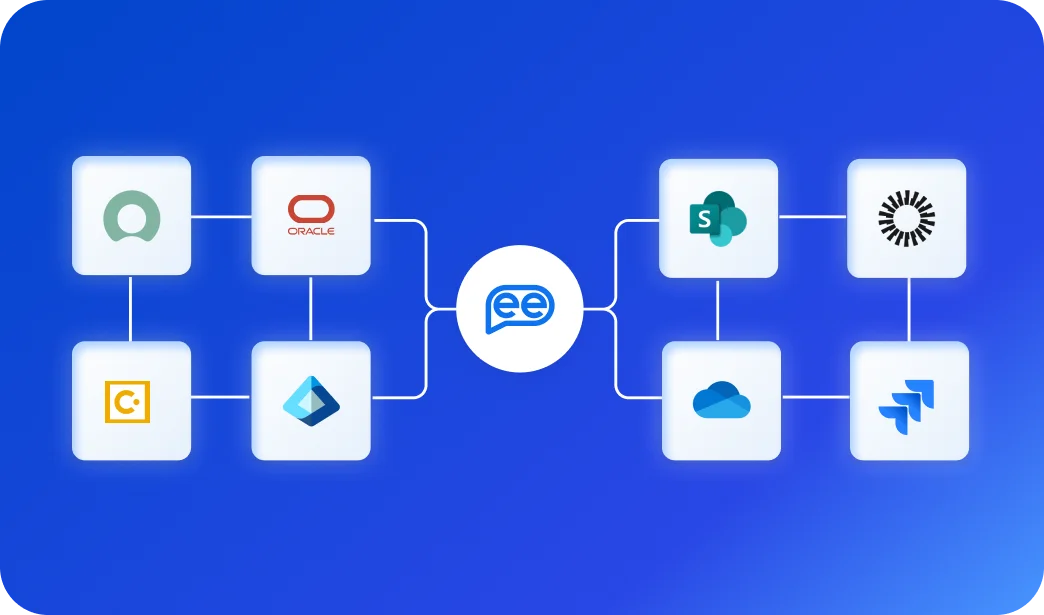
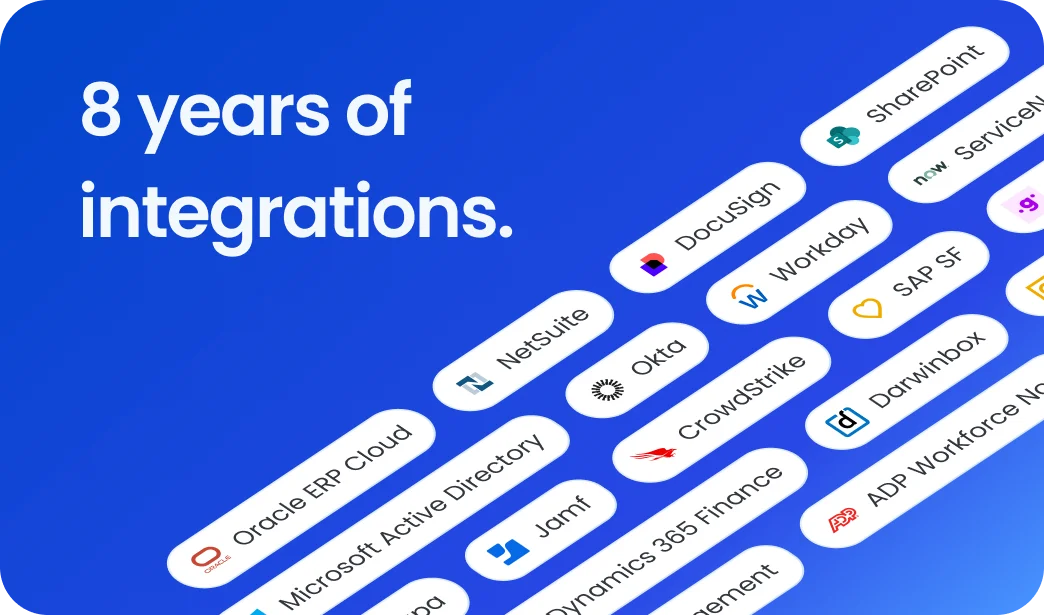
Leena AI offers 200+ pre-built integrations across HRIS, ITSM, ERP, identity and business apps, including Workday, SAP, ServiceNow, Salesforce, Oracle, UKG, BambooHR, Coupa, SharePoint, Confluence, Snowflake, Databricks, HubSpot, Zendesk, Jira and more. Where APIs aren’t available, AI Colleagues use browser-based skills to operate apps like a human would.
How does Leena AI ensure data security and compliance?
Leena AI is trusted by 500+ enterprises globally and holds HIPAA, SOC 2, ISO/IEC 27001, 27701, 27017, 27018 and GDPR certifications. Data is encrypted with AES-256-GCM at rest and TLS 1.2+ in transit, with AWS KMS-managed keys, encrypted backups, SSO via SAML 2.0/OAuth, MFA and role-based access controls.
Can AI Colleagues handle sensitive data like PII and PHI?
Yes. AI Colleagues are designed for restricted data by default. All controls, including encryption, RBAC, logging and data erasure, assume processing of confidential information including PII and PHI, making them suitable for healthcare, finance and other regulated industries.
What deployment options are available?
Three deployment models meet data residency and isolation needs: shared public cloud (multi-tenant with full logical isolation), isolated public cloud (single-tenant environments), and private cloud / VPC deployment. Deployments are supported across 14+ regions globally.
How does Leena AI prevent AI hallucinations and ensure accuracy?
Multi-layer guardrails: a fine-tuned model layer (WorkLM™), an AI Colleague configuration layer, an AOP execution layer and a system prompt layer. Tools are deterministic: each one knows exactly what system it’s hitting, what fields it can change and how to validate responses, so there are no hallucinated API calls. Primary and evaluator LLMs, structured knowledge steps and full audit trails reinforce accuracy.
What is the Context Graph and how does it improve AI Colleague performance?
The Context Graph is a memory structure that captures decision traces from every interaction an AI Colleague has with humans, systems, vendors and other agents. It records exceptions, precedents and reasoning, so AI Colleagues make faster, smarter decisions over time on top of the instructions in the AOP.
How do humans stay in control of AI Colleagues?
Every AI Colleague is assigned a Human Manager who resolves exceptions and edge cases. AOPs explicitly define when to pull humans in, based on risk thresholds, exception patterns or missing data, and when to proceed autonomously. AI Colleagues escalate with full context (what’s been done, what’s blocked, recommended options) so humans decide quickly while the AI continues.
What observability and monitoring tools are included?
End-to-end trace logs for every prompt, tool call, document, decision and fallback, plus dashboards for Knowledge Health, Process & SLA Analytics, Cost & Performance Telemetry and Helpdesk Insights. Teams can drill into any execution, monitor token usage and latency by step, track automation rates and capture user feedback for continuous improvement.
Can AI Colleagues work 24/7 without manual triggers?
Yes. AI Colleagues are always-on persistent workers. They can be triggered by schedules (e.g. daily reconciliations), system events (e.g. a new employee added in the HRMS), API calls, MCP or human prompts. Each AI Colleague keeps its own Workbench of upcoming tasks and supports stateful execution with callbacks, pausing at approval steps and resuming exactly where it left off.