Build enterprise AI Colleagues
that actually ship.
The platform Fortune 500 teams use to put AI Colleagues into production. Describe the work in AOPs. Wire in deterministic tools. Plug in your apps and knowledge. Kickoff to live in days.









Three steps to a working
AI Colleague.
No migration project. No custom code. Kickoff to live in days - not fourteen months.

Connect what you already have.
200+ enterprise systems and knowledge sources in one layer. Permissions port over. Authenticate and ship.

1000+ pre-built tools, ready to go.
Workday updates, ServiceNow queries, SAP postings - all deterministic, all validated. Drag in what you need. No custom code

Describe it. AI builds it.
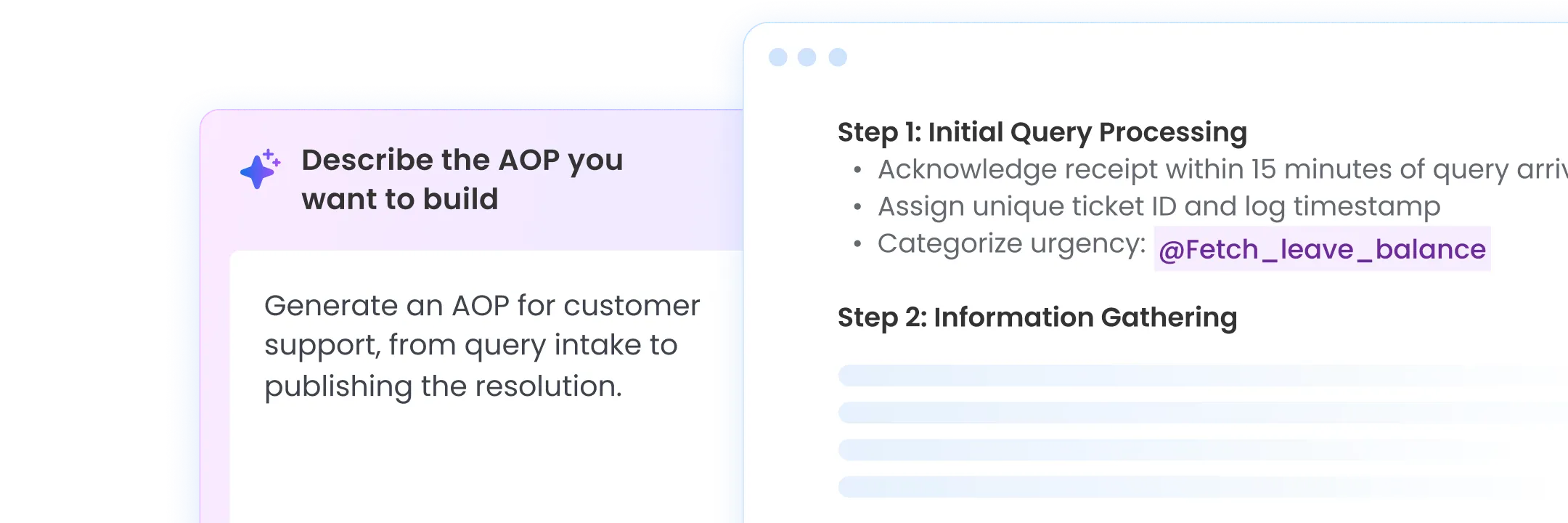
For everything pre-built can't cover. Describe an AOP or tool in plain English - AI builds the steps, tools, forms, and logic. Refine through chat.
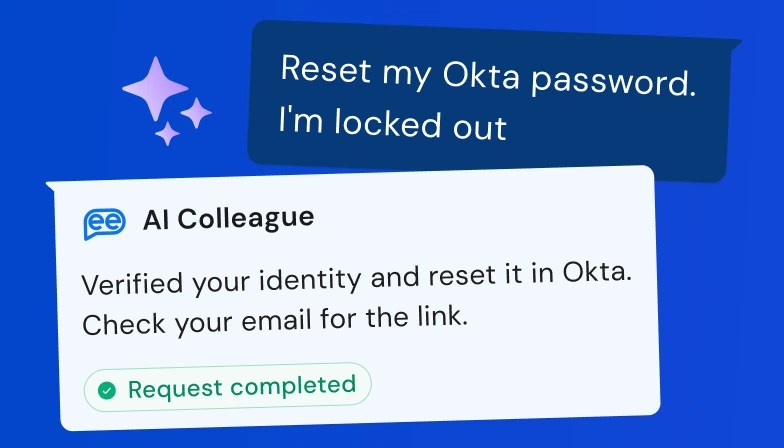
See what's live. See what's possible.
Real AI Colleagues, deployed at real enterprises. Pre-built actions across every function. All in one place.
Describe the work in an AOP.
We'll automate it.
An AOP - Agentic Operating Protocol - is to an AI Colleague what an SOP is to a human.
It mirrors how business teams already function: steps, owners, approvals, actions.
Built for the people who own the process.
 Build it
Drag in tools from the 1000+ registry. Or describe the process in plain English and let the AOP Creator draft it for you.
Change itPolicy shifts? The owner edits the AOP. No engineering ticket. No release cycle.
Handle exceptionsFallbacks and SLAs are explicit. No approval in 24h? Follow up. Still nothing? Raise a ticket.
Bring humans in The AOP decides when to escalate, gate, or hand off. Approvals, edge cases, risk thresholds - all in the process.
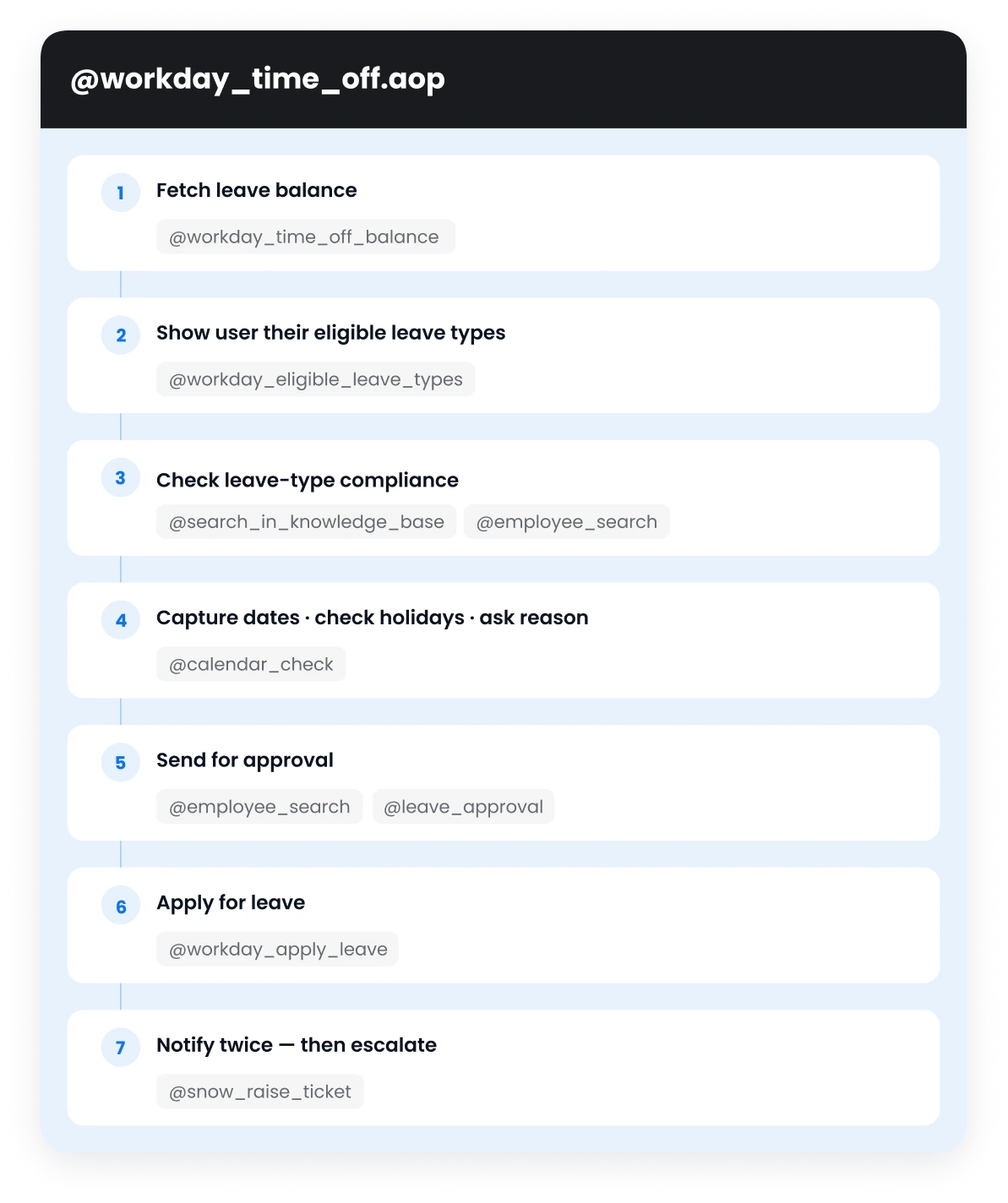
AOPs and tools don't improvise.
Most agentic systems break the second they leave the demo.
LLM improv = process drift.
Agents that invent the workflow on the fly behave differently every run. Variance kills SLAs, compliance, and audit. Great for the keynote. Useless for the close.

Steps appear, vanish, and reorder between runs
No deterministic path means no audit trail anyone will sign
“AI-drawn flowcharts” still need engineers to maintain
Rails for the process. Reasoning inside.
The AOP is the rails: explicit, deterministic, explainable. Tools do the work - each one locked to a specific system and its fields. The LLM reasons inside fixed boundaries.

Same input, same path. Every time.
Each tool knows its system, its fields, and how to validate
High-risk actions are tool-locked. No hallucinated API calls.
Seven things demos skip.
Production needs all of them.

Made for biz, not just technical whizkids.
AOPs read like the SOPs your team already has. The process owner ships without an engineer in the room. Policy changes? The owner edits the AOP. Engineering stays out.
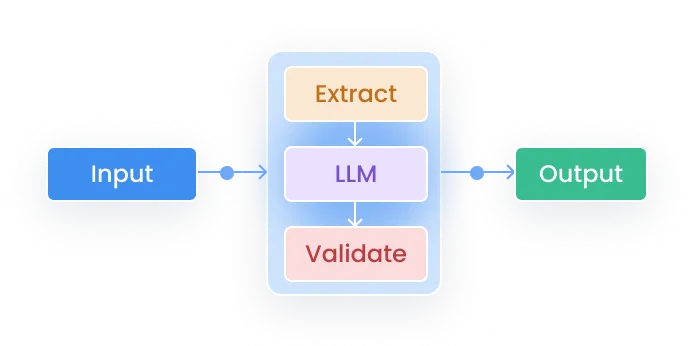
Deterministic tools. No LLM improv.
Each tool knows its system, its fields, and how to validate. The graph defines the path. The LLM stays in its lane. Same input → same answer. Every time.
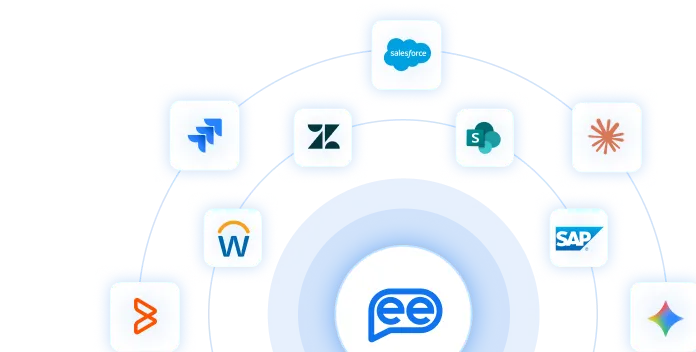
Plug into 200+ enterprise systems.
One integration layer for the systems of record that run the enterprise - HRIS, ITSM, ERP, identity, business apps. Ready to authenticate on day one.
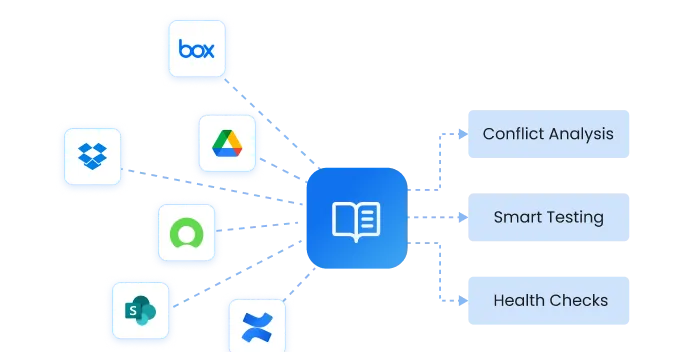
Grounded in your knowledge.
SharePoint, Confluence, Drive, Box, websites. It connects, doesn't copy. Source permissions are inherited. You skip the month long content project.
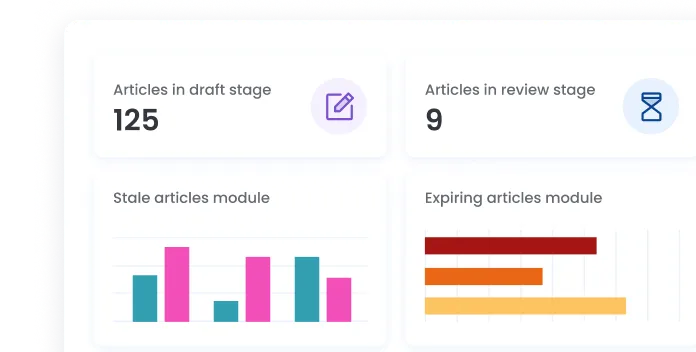
X-ray vision for every Colleague.
Responsible AI, all the way. Observability shows you what your AI did. Governance decides what it’s allowed to do. Role-based access, policy guardrails.
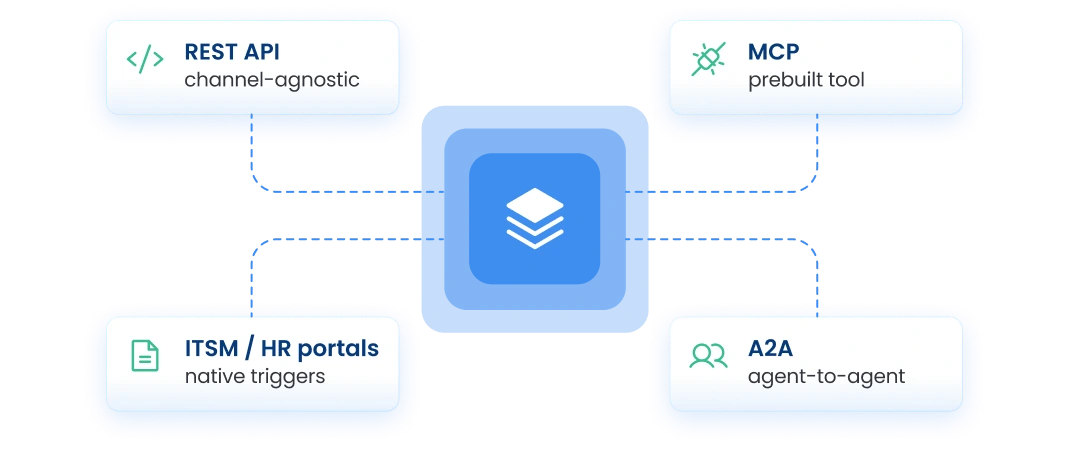
Connect with any AI. Any system.
Trigger from anywhere: MCP, A2A, REST API. MCP also ships as a plug-and-play skill: drop it into any AOP like a normal step.
Work that keeps moving - even when people don't.
Colleagues don't wait in a chat window. They subscribe to time and events. Run on a schedule. Trigger on a system event, like a new hire in the HRMS. Pause for approval, resume with full context. Stateful. Persistent. 24×7×365.
Pick your next stop
Hand-picked next reads — short on filler, long on what matters.
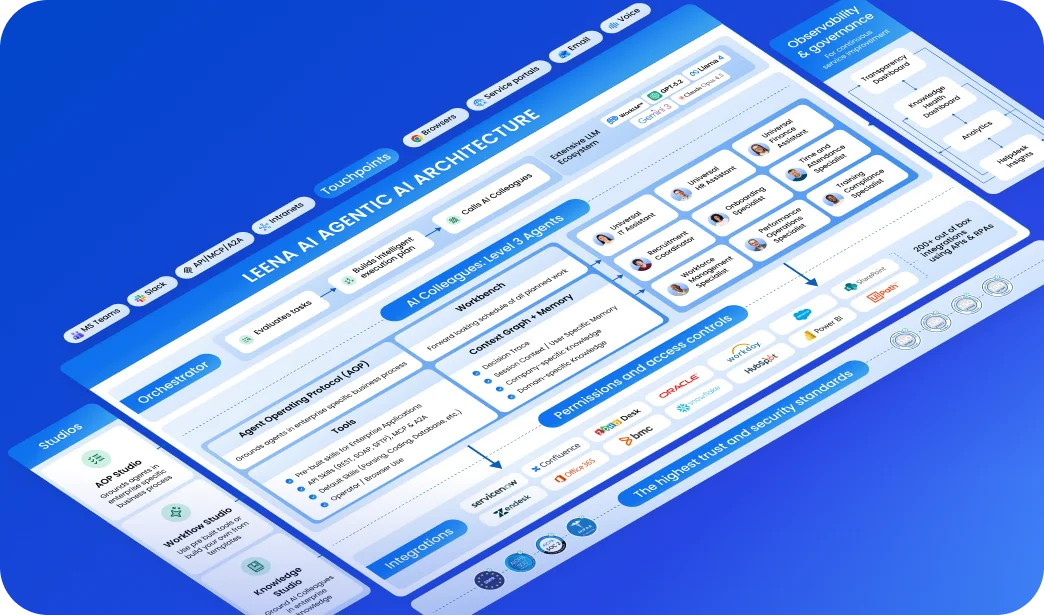
Agentic AI Architecture
The platform Fortune 500s use to build, govern, and run enterprise AI Colleagues.
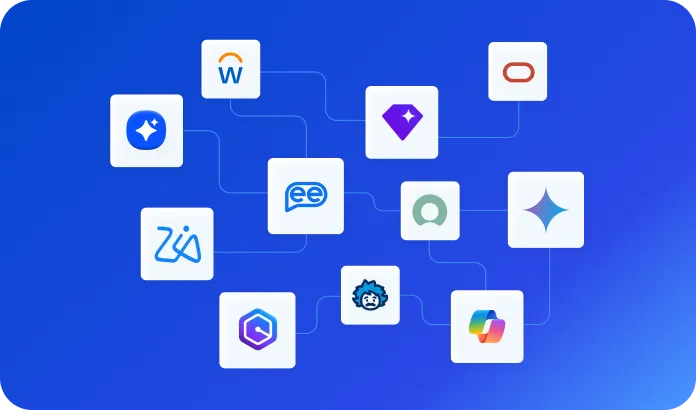
A2A and MCP Built-In
Unlock seamless integration between your in-house AI and Leena AI Agents.
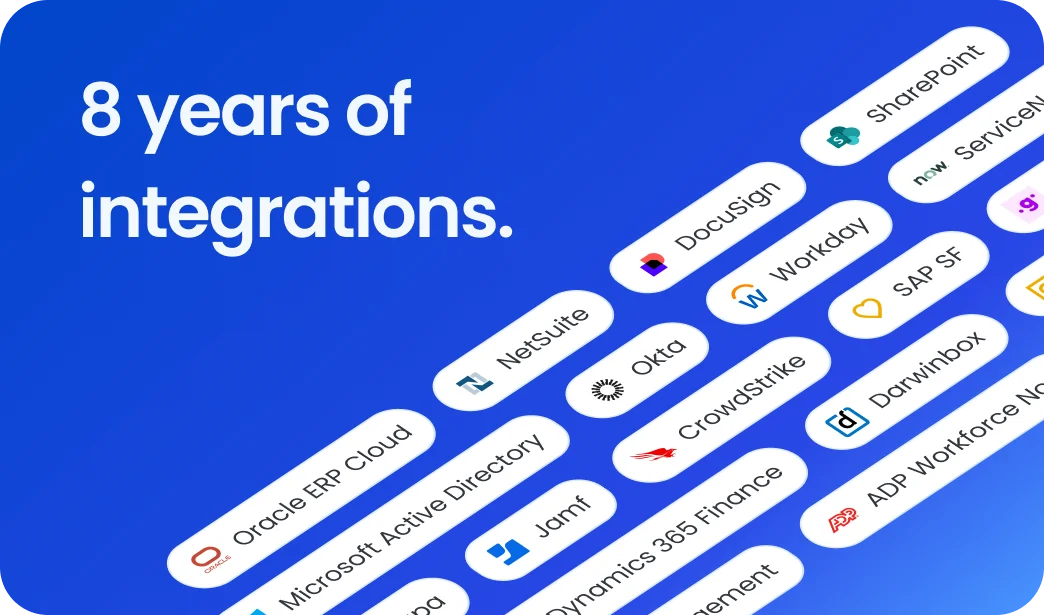
8 Years of Integrations
One integration layer, 200+ systems of record, battle-tested in 500+ enterprises over 8 years.
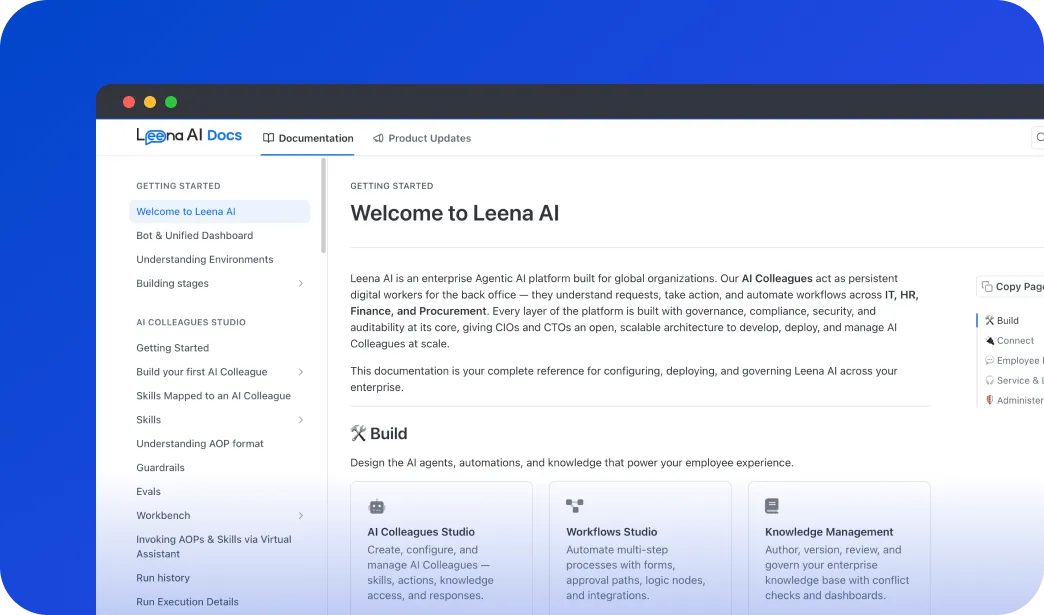
Leena AI Documentation
Your reference for configuring, deploying, and managing AI Colleagues at scale.
Frequently asked questions
Who is the AI Colleagues Platform for?

What exactly is an AOP (Agent Operating Protocol)?
AI agents vs. AI Colleagues - what's the difference?
How is this different from a workflow builder with an LLM bolted on?
How long does it take to build an enterprise AI Colleague?
What does AI governance look like on the platform?
How are AI Colleagues triggered?
How do you prevent hallucinations?
What happens when an external system fails mid-run?
Is it secure enough for regulated data?
Demo to deploy shouldn't take a year.
What we tell every CXO who's tried Agentic AI and gotten burned.