
Hours back every month: how security teams use Leena AI Forge to move faster
Every hour spent tracing a failed run is an hour not spent shipping the next use case. Forge cuts that tracing from 25 minutes to 15 seconds.
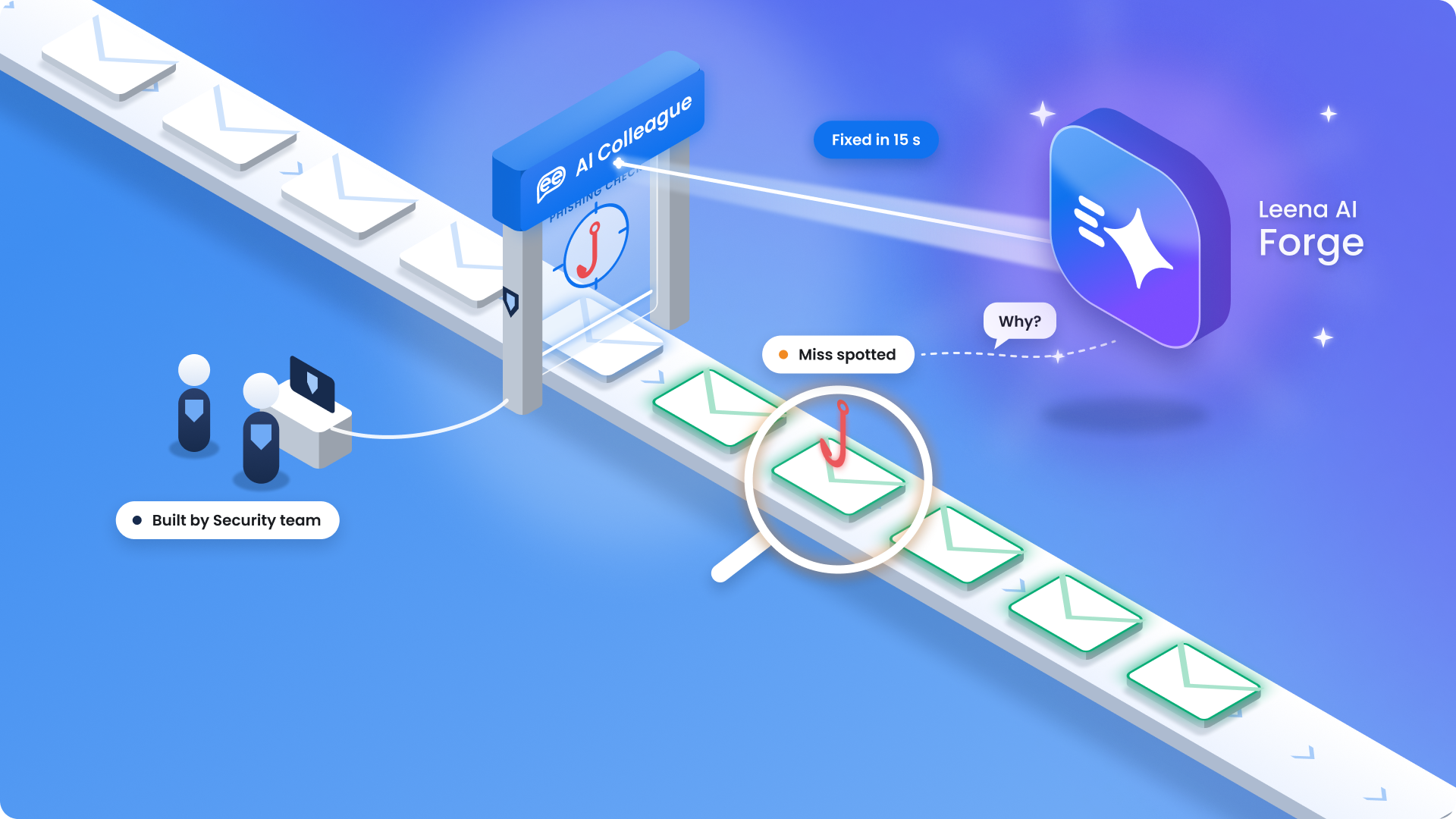
The use case: first-pass phishing triage
Employees report suspicious emails every day. Each one has to be checked before an analyst can close it.
A security team at a global enterprise built an AI Colleague on Leena AI to do the first check. Every reported email becomes a ServiceNow ticket. The AI Colleague picks it up, pulls out the sender, links and attachments, checks them against VirusTotal and URLScan, and writes a summary and a proposed verdict back to the ticket. An analyst makes the final call.
It handles about 19 reported emails a day, around 1,100 every two months.
The pain: keeping it accurate never stops
Going live was the start. Keeping the AI Colleague accurate is the real work, because everything around it keeps changing.
- One fix can break another. The procedure is long, and every edit has to keep earlier rules intact.
- Connected systems change. Before go-live, the step that fetched emails from ServiceNow couldn’t read attachments and had to be rebuilt.
- Environments drift. Staging and production ended up with slightly different tool names, so what worked in one failed in the other.
- Models change. The same instructions can behave differently on a new AI model.
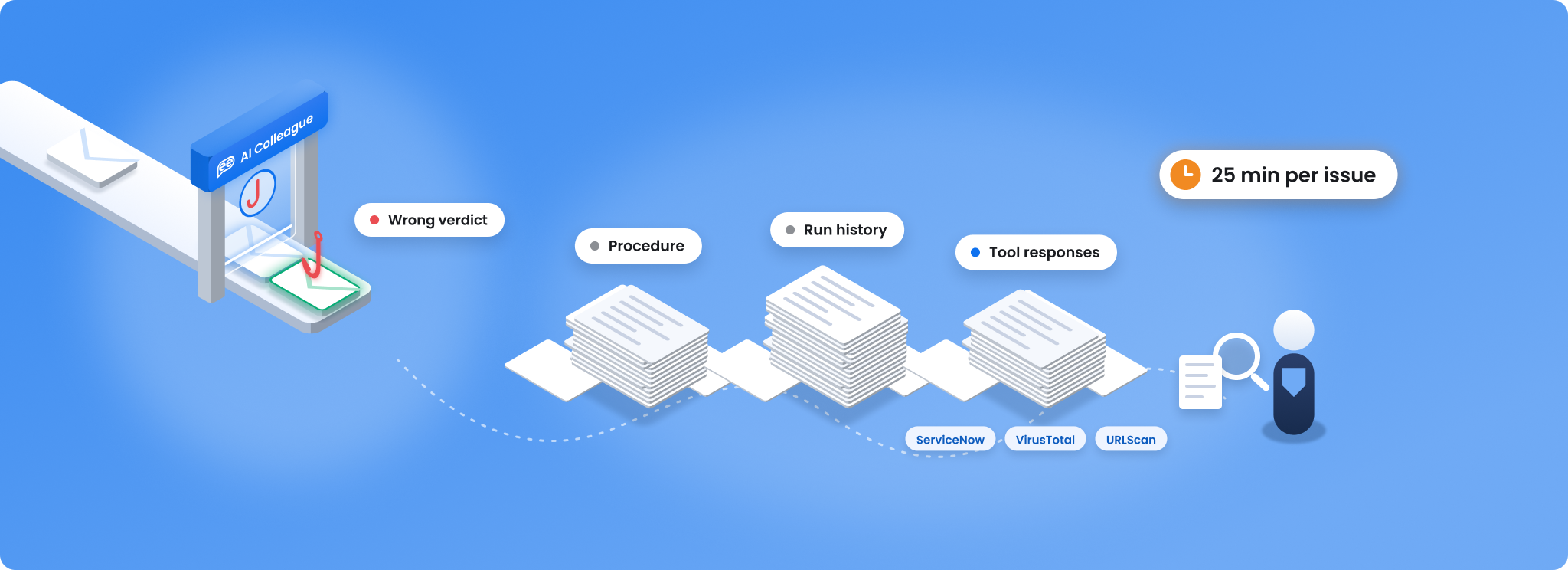
Every change starts the same loop: spot a wrong verdict or a failed run, find out why, fix it, test it, publish it.
The slowest step is finding out why. The builder traces the run step by step and reads what every tool returned. That takes about 25 minutes per issue. Everything else waits until it’s done.
How Forge changes it
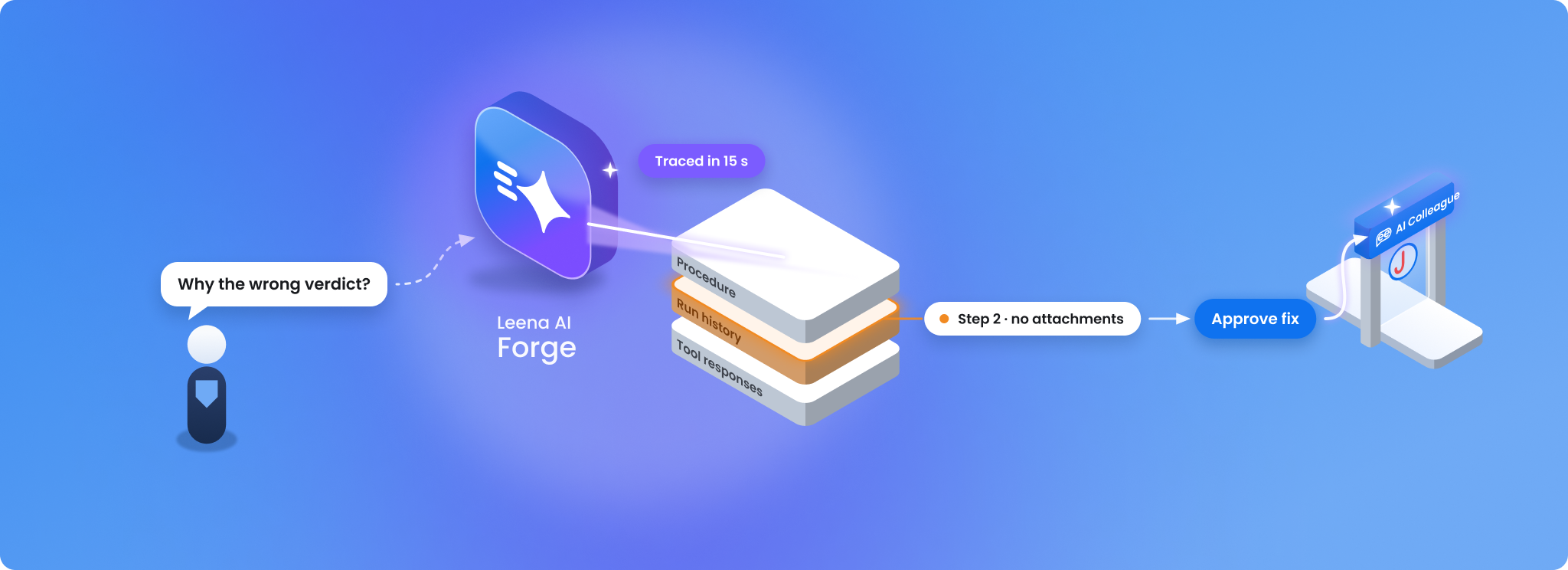
Forge is built into the Leena AI platform. The builder asks in plain English: “Why did this run give the wrong verdict?”
Forge reads what the builder would otherwise dig through by hand: the procedure, the run history and every tool response. It explains the cause in plain language, proposes the fix, and makes the change once the builder approves.
On this team’s phishing AI Colleague, an issue that took about 25 minutes to trace by hand took Forge 15 seconds. Same cause. Same fix.
What it adds up to
One issue saves about 25 minutes. The value shows up over a month.
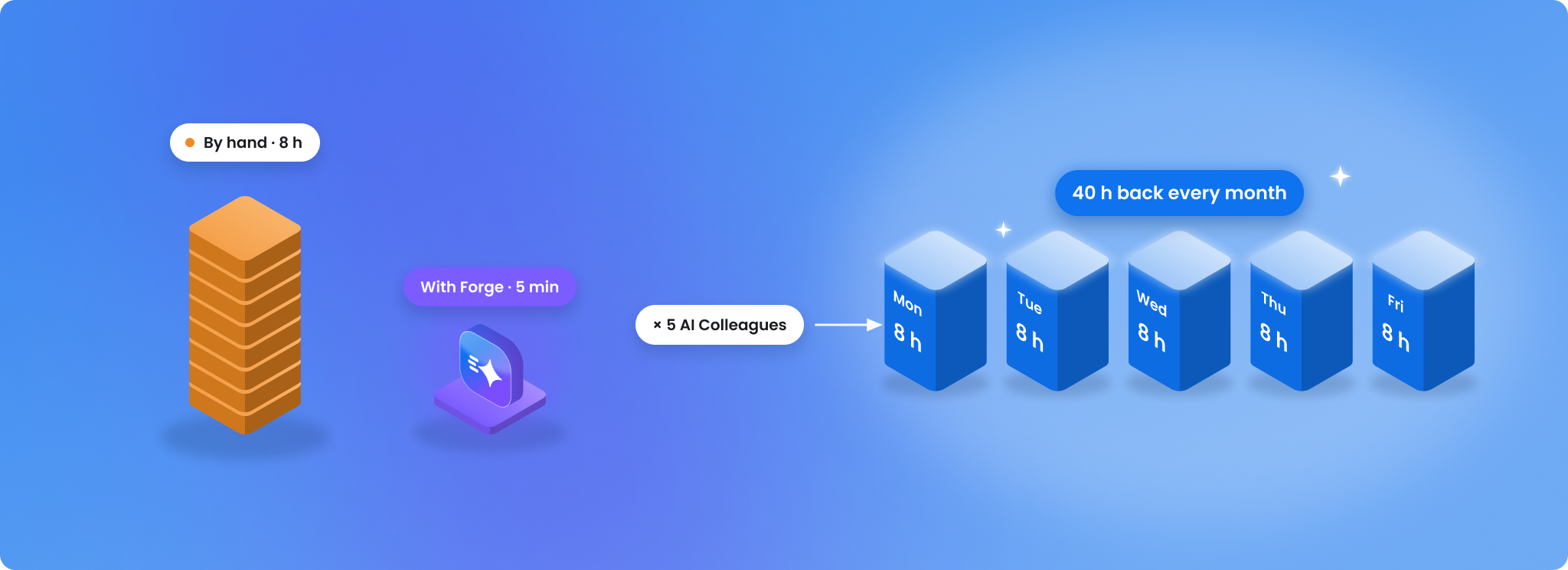
- By hand: a builder chasing 20 issues a month spends about 8 hours tracing runs
- With Forge: about 5 minutes
- Across five AI Colleagues: roughly 40 hours, a full work week back every month
That time goes into moving faster: tuning verdicts, adding sources, shipping the next use case.
It also decides what survives. An automation that’s cheap to maintain stays live. One that isn’t eventually gets switched off.
See Forge do it live.
In a 30-minute demo, watch Forge take a real HR or IT use case from a plain-language description to a built, tested automation. Book a demo
Read the launch post: Introducing Leena Forge

VP Product Marketing & Brand Marketing. Enterprise GTM at AppNexus, HubSpot, and Nextiva. Tarun separates AI's signal from its noise.
Pick your next stop
Hand-picked next reads — short on filler, long on what matters.
 Published 2 November, 2026
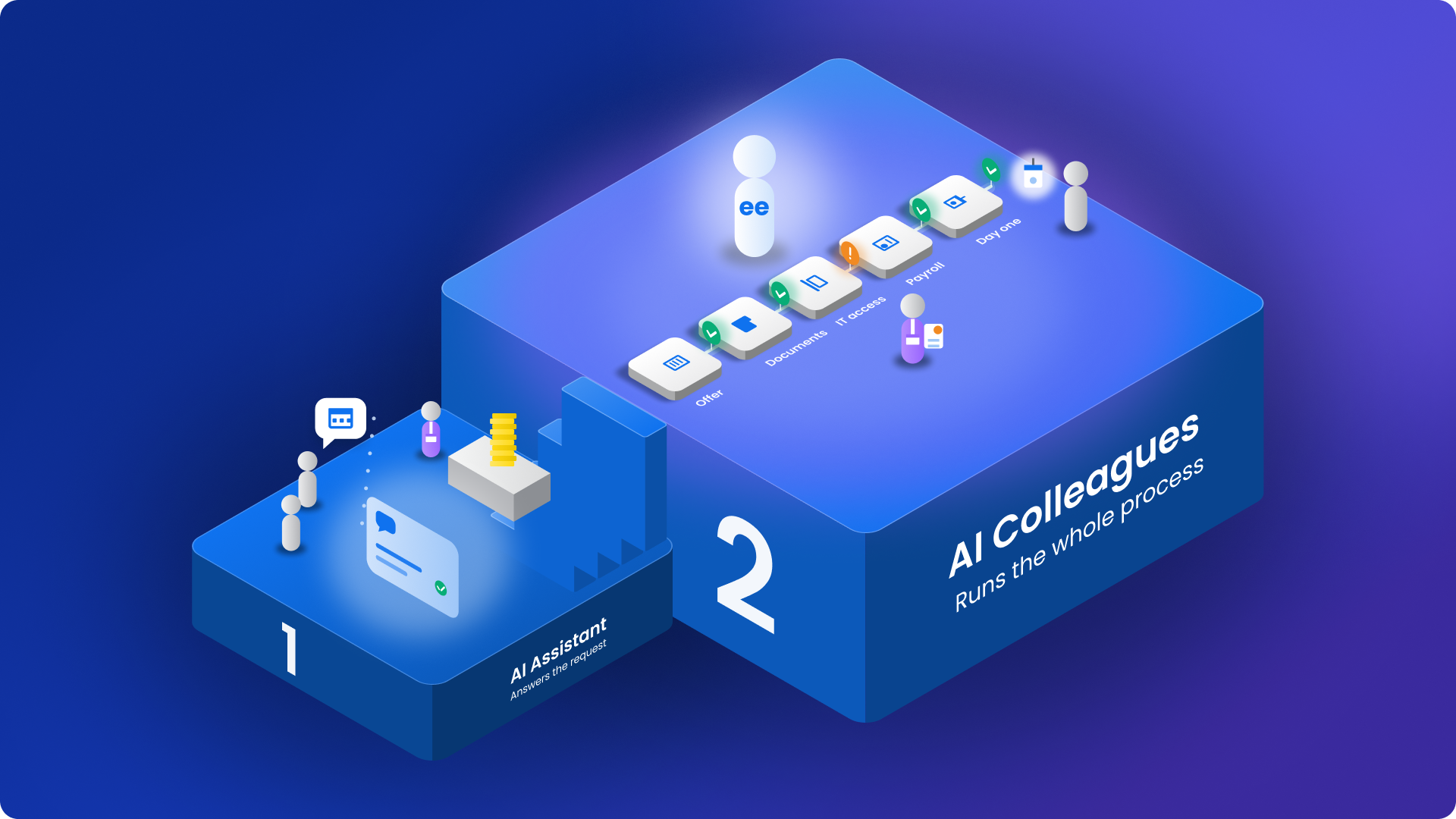
Agentic AI for HR has two steps. Most teams have only taken the first.
 Tarun Bhatti
 Published 28 October, 2026
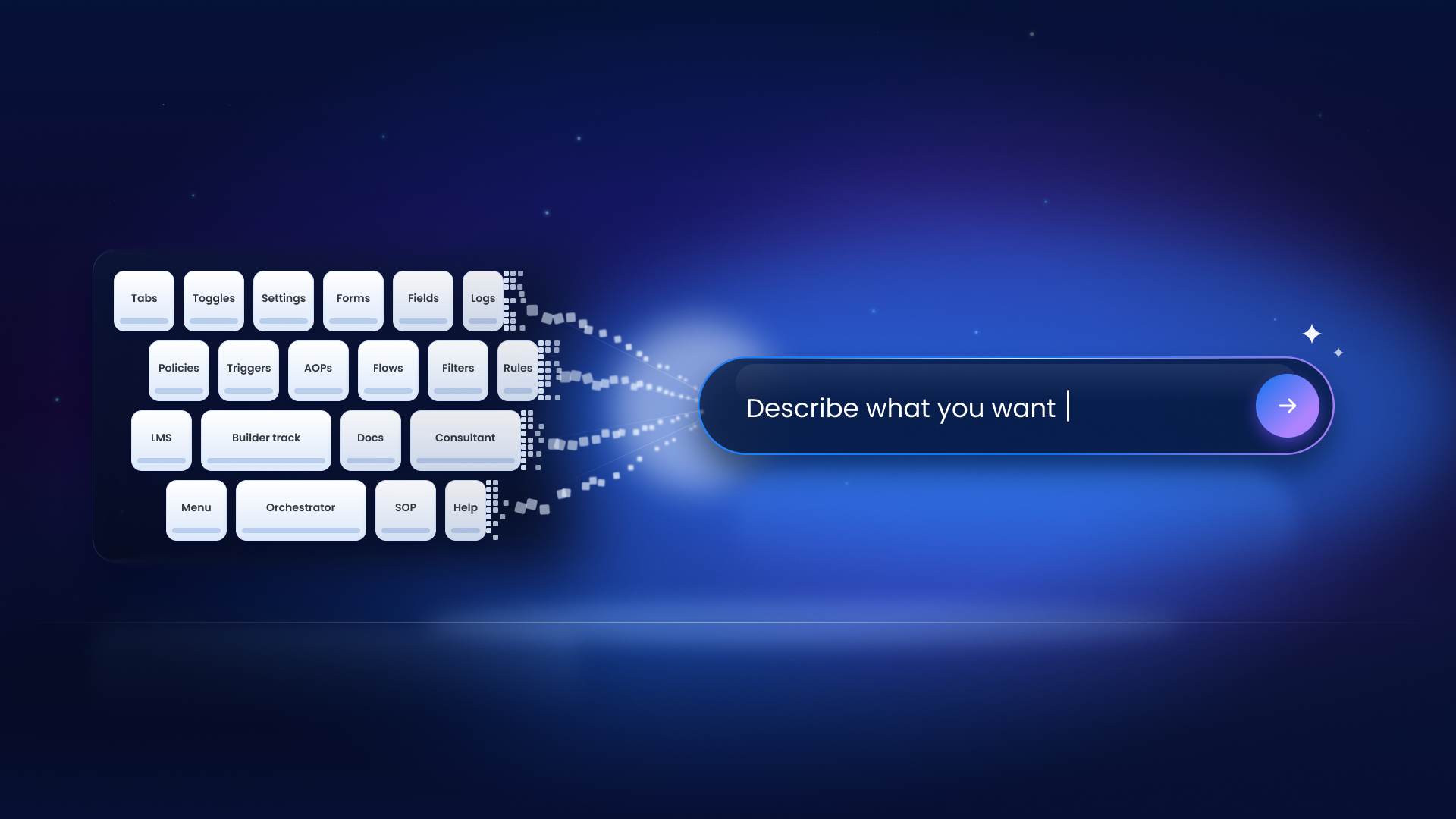
The first iPhone shipped without a keypad. Why does your AI-native platform ship with an extensive UI?
 Hammad
 Published 14 October, 2026
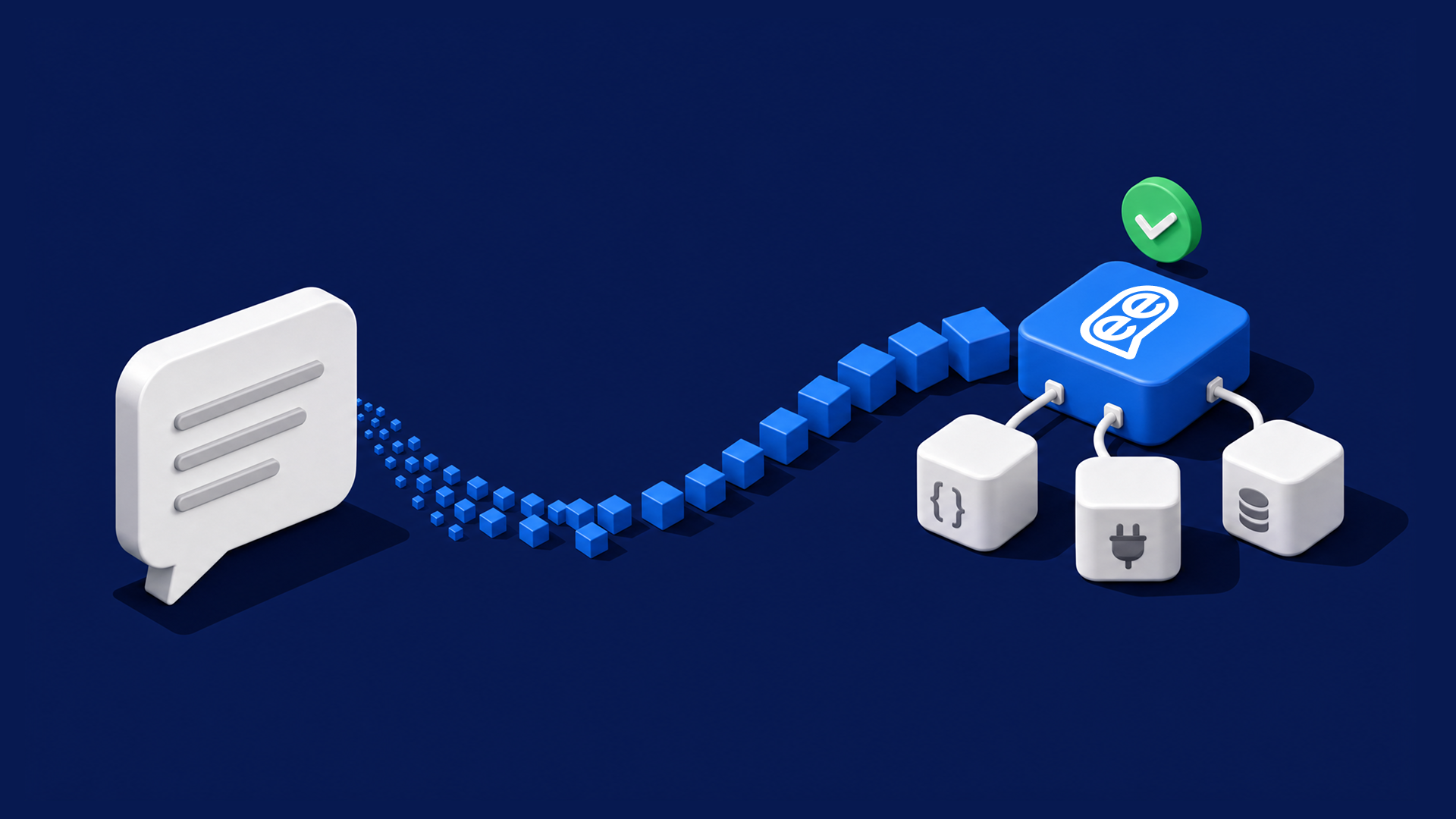
Introducing Leena Forge: pilot to production in 187 days, then 43. Next, hours.
Tarun Bhatti Published 8 September, 2025
The Leader’s Guide to AI SaaS Company Names (2025)
 Prashant Sharma
 Published 26 October, 2026
What two weeks of attacks mean for enterprise AI
 Anand Prajapati
 Published 23 October, 2026
Publish your failure rate: why we benchmark before we ship
 Mayank Kapoor


