
Three Expertise that make Agentic Back-Office Deployments Successful
Agentic AI deployment needs three experts at the same table: platform, application and domain. How Leena AI's Center of Excellence makes back-office programs stick.
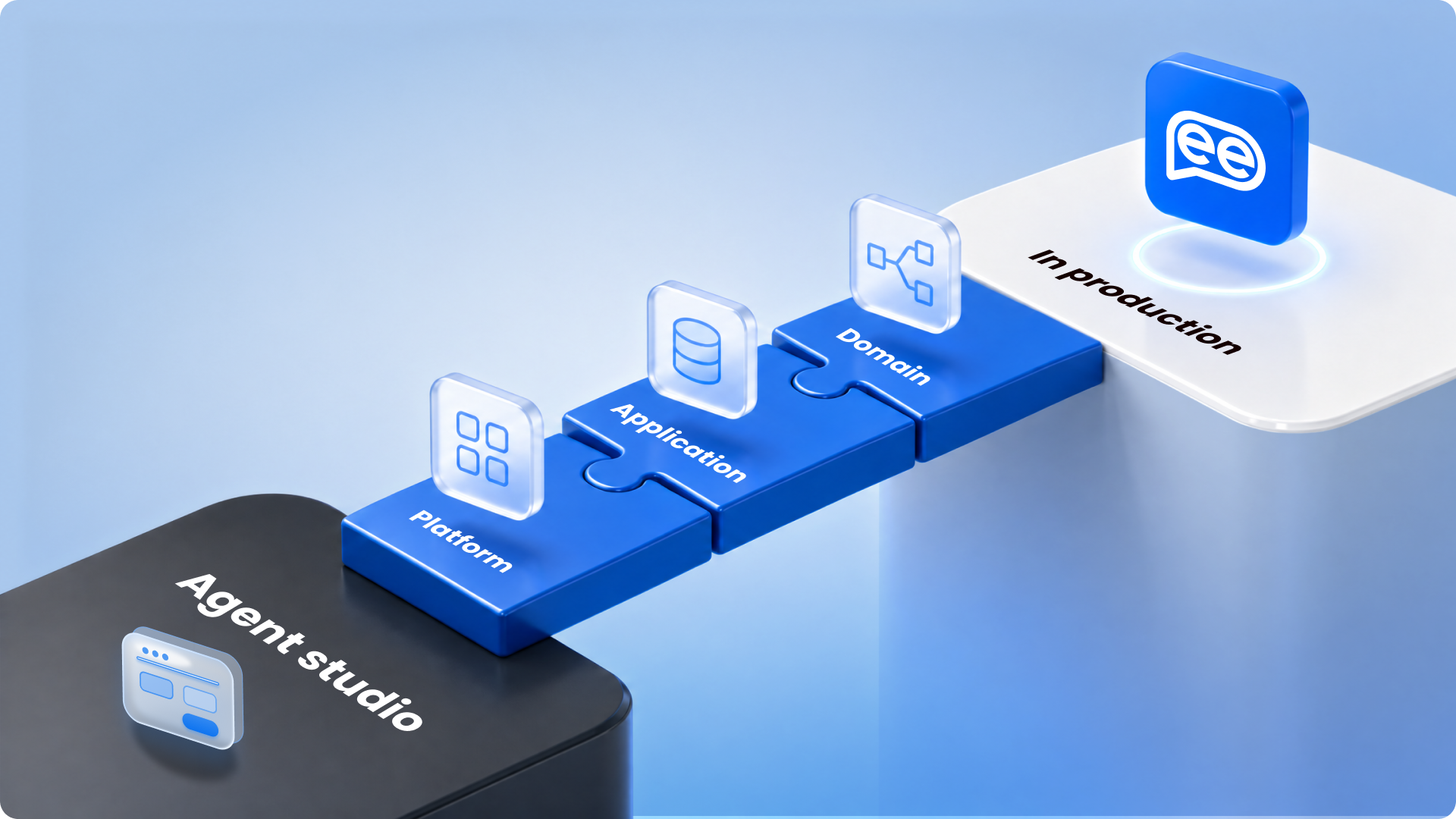
The studio is now the easy part
Every back-office software vendor now ships an agent studio. Connect a system, describe a process, publish an agent. The demo takes ten minutes.
Then the first real use case shows up. A leave request needs a balance from the HR system, an approval chain that changes by country, and a policy exception nobody wrote down. The studio is ready. The use case isn’t.
We see the same pattern across HR, IT and finance deployments. The gap between a studio and a process running in production is filled by three kinds of expertise:
- Platform expertise. Knowing the studio well enough to build fast, and build right.
- Application expertise. Knowing the system of record well enough to make it cooperate.
- Domain expertise. Knowing the work well enough to change it, not just copy it.
Most programs bring one of the three. Some bring two. The value shows up when all three sit at the same table. That is why we built the AI Colleagues Center of Excellence (AIC COE) at Leena AI: one team that brings all three to every customer.
1. Platform expertise: get live fast, then hand over the keys
Forward deployed engineers (FDEs) close the distance between a customer’s first use cases and the platform, and leave behind a team that can keep building.
A first-time builder looks at a new use case and sees a dozen ways to build it. Should this be an agent operating protocol, a workflow, a knowledge article or a tool call? Which pre-built AI Colleague is already most of the way there? Where will it break at scale? An FDE has answered those questions across many customers on Leena AI. That experience is what turns weeks of trial and error into days.
In practice, FDEs do three jobs:
- Fast start. They take the first use cases to production on proven patterns, not a blank canvas.
- Bridge the gap. Early use cases rarely fit the platform perfectly. FDEs find the right construct, or work around a gap and feed it back to our product team.
- Train the client’s builders. They build side by side with the customer’s team, so the people who will maintain the AI Colleagues learn by shipping, not by sitting through a course.
The last job is the one that matters most. We hold FDEs to a simple test, which our FDE Sumanth Nallamotu walks through in this webinar: by the end of the engagement, the customer’s admin changes production without the engineer touching it. An FDE who stays forever is a cost. An FDE who leaves behind capable builders is an investment.
2. Application expertise: same process, different system
A leave request in Workday and a leave request in SAP SuccessFactors are two different automation problems. The business process is the same. The system underneath it isn’t.
Here is what an application expert checks before anyone builds the AI Colleague:
Workday | SAP SuccessFactors | |
How leave is modeled | Absence Management, with time off and leaves of absence run as separate business processes | Employee Central Time Off: time types, time accounts and time profiles |
How the agent reads and writes | Workday SOAP and REST APIs, plus custom reports enabled as web services (RaaS) for data the standard APIs don’t expose | OData v2 entities, such as EmployeeTime for requests and EmpTimeAccountBalance for balances |
What the source system needs first | An integration system user, a security group with domain permissions, an API client, and RaaS reports shared with that user | An API user with role-based permissions, and the Time Account object set to Secured before the API can read it |
Where it quietly breaks | A RaaS report not shared with the integration user returns an empty dataset, not an error | An API user with admin access to the MDF OData API creates leave requests that skip the approval workflow |
Each of these is a small setting. Each one, found in week six instead of week one, costs a sprint. None of them shows up in a studio demo.
Application experts know these systems from the inside. Before build starts, they tell the customer’s Workday or SAP admin exactly what to configure, in that admin’s own language. The business process then gets automated on Leena AI as designed, not as the system of record happens to allow.
A connector gets you to the system. An application expert gets you through it.
3. Domain expertise: redesign the process, then productize it
The biggest return comes from optimizing the process for the agentic world, not just automating it as is. Domain experts know which steps protect the business, and which exist only because people had to check each other’s work.
Most back-office processes were designed around people. A form, because someone had to collect the data. An approval, because a manager had to check the policy. A handoff to payroll, because two teams sat in two systems. Automate that process step for step and you get the same process, a little faster.
An AI Colleague doesn’t need most of that scaffolding. Take the leave request again. Copied, the agent fills in the form, routes it to the manager, waits, then emails HR and payroll. Redesigned, the AI Colleague checks the balance and the policy the moment the employee asks. Requests inside policy go straight through, if the business chooses to allow that. Only exceptions reach the manager, with the context to decide in one tap.
[embed: node/5c51af16-6ccb]
One check at the start replaces the wait for a manager on every request inside policy.
We see the same shift in production. At one of our clients, an AI Colleague owns the hiring funnel from application to interview-ready, and a recruiter steps in only when a compliance check fails. First contact dropped from 19 days to 15 minutes. The process was rebuilt around exceptions, not around a recruiter’s inbox.
Knowing where to cut takes real domain knowledge:
- Which approvals are a legal or audit requirement, and which are habit
- Where exceptions cluster, and who should own them
- Which country, union or policy rules change the flow
- Which metric the business actually cares about
Get it wrong and you either automate waste or remove a control that mattered. Get it right and you save build time, because there are fewer steps to build, test and maintain. You also raise ROI, because the AI Colleague takes over the work, not just the keystrokes.
This expertise doesn’t stay inside one engagement. It is what powers the growth of our marketplace of pre-built AI Colleagues, which already sit behind Forge. A process our domain experts redesign once becomes a working starting point that the next customer adapts, instead of building from a blank canvas. So we don’t just lend domain expertise project by project. We productize it.
One team, three lenses: the AIC COE
The AIC COE puts all three kinds of expertise on the same engagement, so every use case gets the platform, system and process answers at the same time.
Expertise | The question it answers | What happens without it |
Platform | How do we build this on Leena AI, fast, and keep it running? | The first use case drags on, and nobody on the customer side can maintain it |
Application | What does the system of record need for this to work? | Permissions, reports and API gaps surface late in testing |
Domain | Should the process look like this at all? | Today’s process gets automated as is: faster, but not much cheaper |
On a leave use case, it works like this. The domain expert redesigns the flow around exceptions. The application expert gets the Workday RaaS report and integration user in place, or the SuccessFactors permissions right. The FDE builds it on Leena AI with the customer’s builders alongside, then hands it over.
Each expert is useful alone. Together, they compound. The redesigned process is simpler to build. The source system is ready before build starts. The customer’s team owns the result. And what the COE learns on one use case, a redesigned flow, a report definition, a tested pattern, becomes the starting point for the next.
One question to ask any agent studio vendor
Before you pick a studio, ask: who brings the platform, application and domain expertise on day one, and who owns the AI Colleagues after go-live?
If the answer is “your team, after training,” expect a slow start. If it’s “our engineers, indefinitely,” expect a dependency. The answer we hold ourselves to: all three experts at the start, and the customer’s own builders in charge at the end.

VP Product Management. Professional with 10+ years of experience currently optimizing technology processes and implementation at Leena AI. He has exposure to both B2C and B2B firms and understand working at scale as well as fast-growth entrepreneurial set-ups. Apart from the work experience, he graduated from IIT Delhi before completing his MBA from IIM Calcutta.
Pick your next stop
Hand-picked next reads — short on filler, long on what matters.
 Published 2 November, 2026
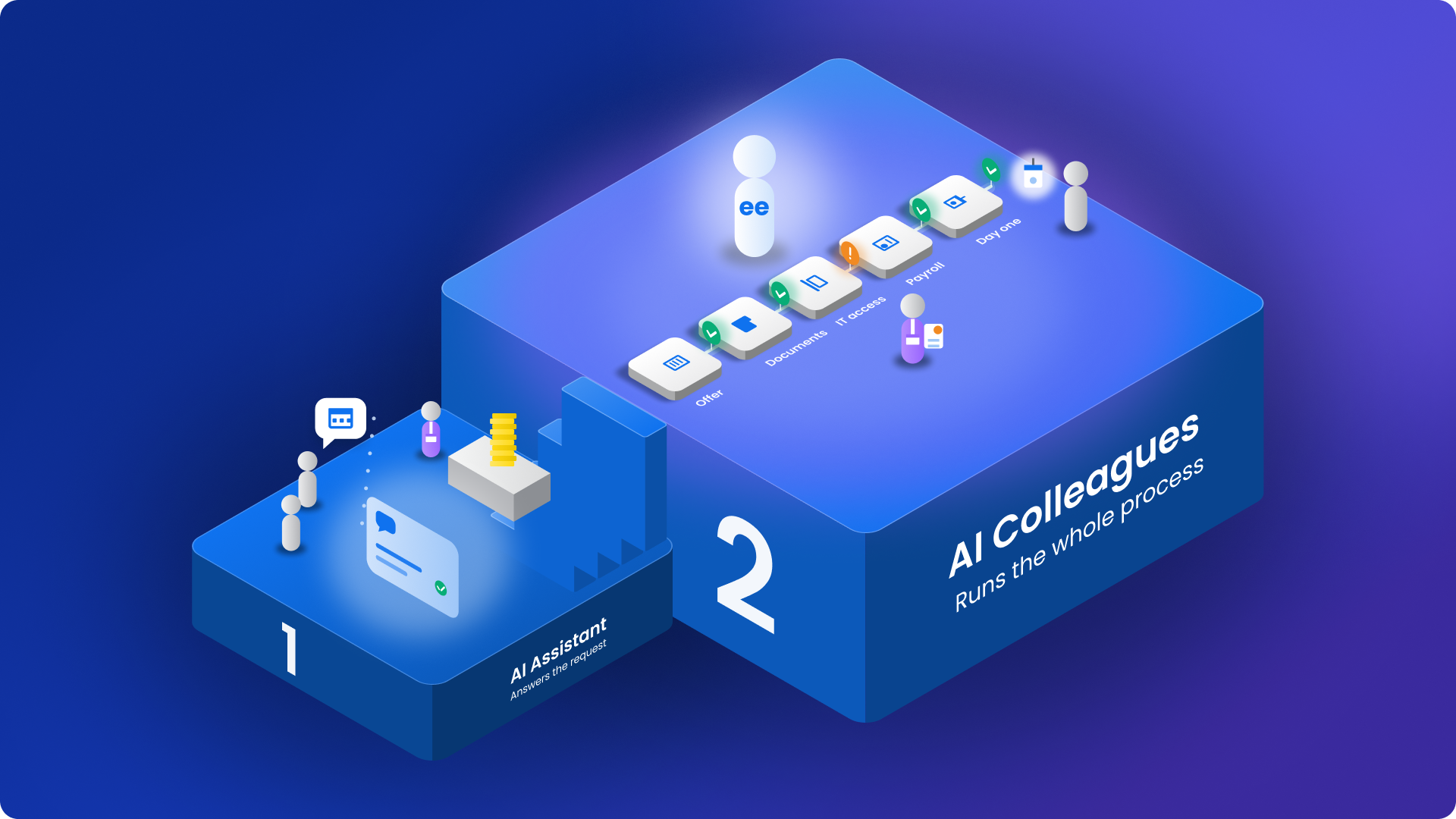
Agentic AI for HR has two steps. Most teams have only taken the first.
 Tarun Bhatti
 Published 21 October, 2026
What IBM Ventures’ Investment in Leena AI Really Means
 Sayan Haldar
 Published 6 November, 2026
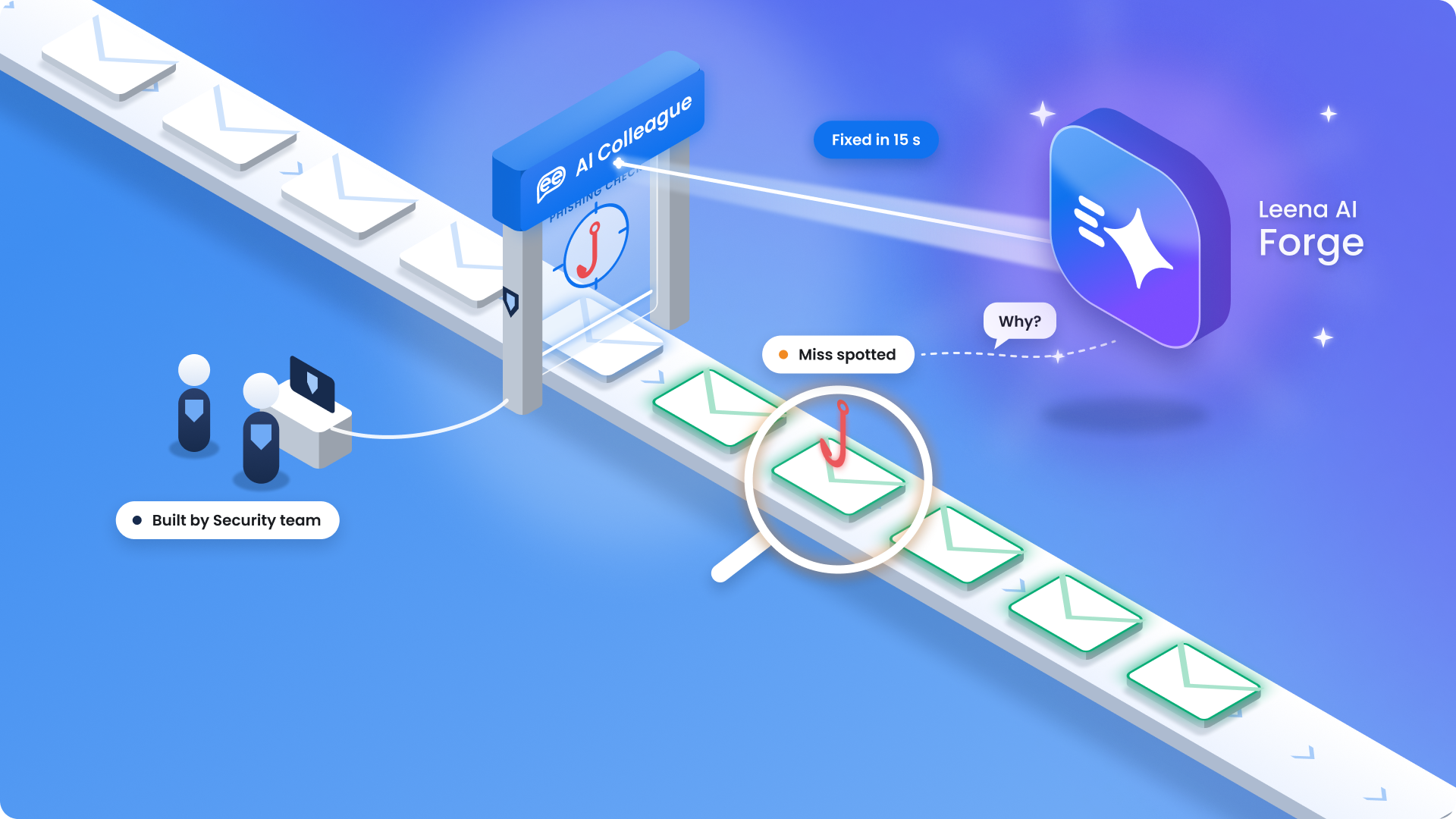
Hours back every month: how security teams use Leena AI Forge to move faster
Tarun Bhatti Published 28 October, 2026
The first iPhone shipped without a keypad. Why does your AI-native platform ship with an extensive UI?
 Hammad
 Published 16 October, 2026
“We already have Claude. Why do we need Leena AI?”
 Abhishek Tayal
 Published 14 October, 2026
Introducing Leena Forge: pilot to production in 187 days, then 43. Next, hours.
Tarun Bhatti

