Enterprise Automation: Your 2025 Guide to Smarter Operations
Unlock the power of enterprise automation in 2025. Discover how AI agents are transforming IT, HR, and Finance for large US companies.
Introduction
In the fast-evolving landscape of modern business, the drive for efficiency and agility has never been more critical. As technology leaders overseeing the intricate ticketing systems of large US companies, you understand the constant pressure to deliver seamless service while optimizing resources. This is precisely where enterprise automation steps in, offering a transformative approach to how your organization operates. No longer a futuristic concept, enterprise automation in 2025 is about strategically deploying intelligent technologies to streamline operations, empower employees, and ultimately, drive significant business value.
What is Enterprise Automation?
At its core, enterprise automation is the strategic application of advanced technologies to automate repetitive, rules-based, and often complex processes across an entire organization. Think beyond simple task automation; this is about orchestrating a symphony of tools to achieve end-to-end efficiency. It leverages a combination of artificial intelligence (AI), machine learning, robotic process automation (RPA), and other intelligent platforms to minimize human intervention in routine tasks. Consequently, your teams can focus on more strategic initiatives. For instance, instead of an IT agent manually resetting a password, an automated system handles the request instantly, freeing up the agent for more critical issues.
How Enterprise Automation Works
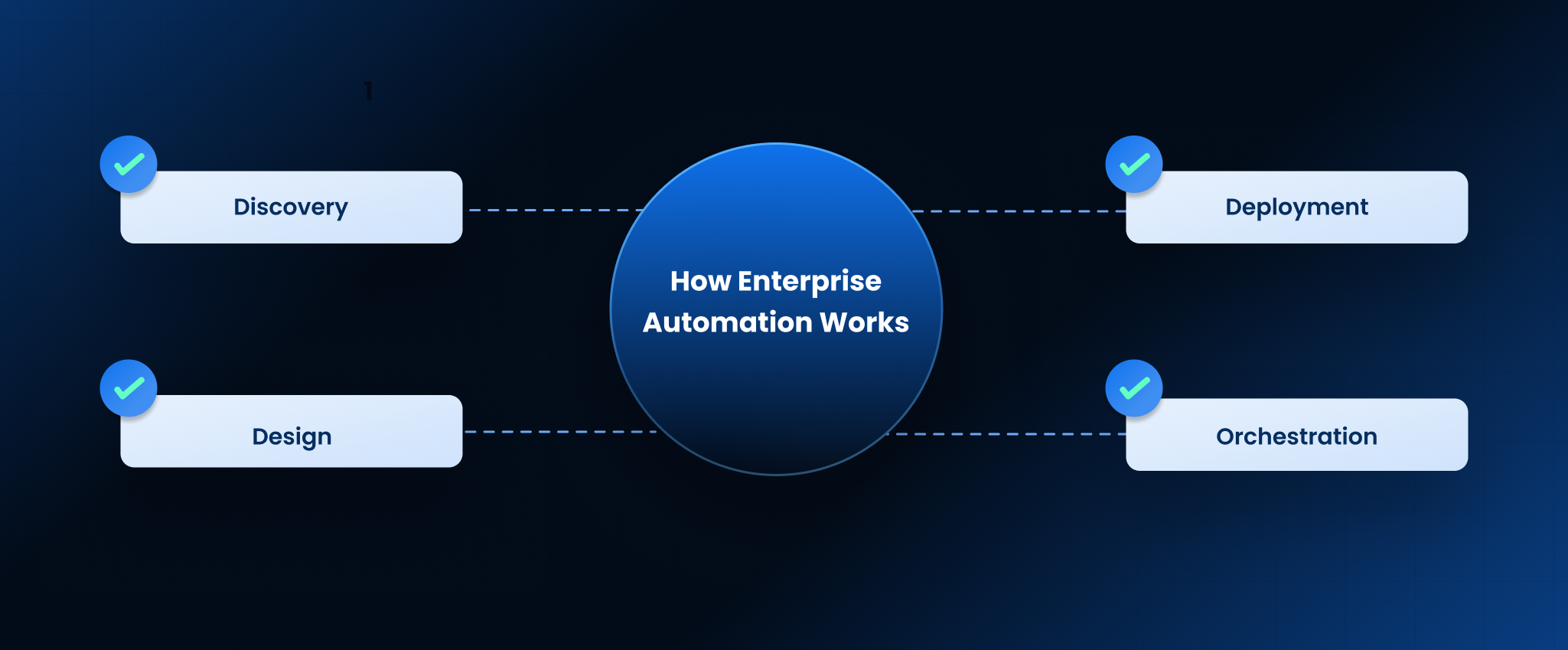
The magic of enterprise automation lies in its ability to connect disparate systems and processes, creating a unified flow of operations. Imagine a digital nervous system for your company. Here’s a simplified breakdown:
- Discovery: First, organizations identify processes that are ripe for automation, typically those that are repetitive, high-volume, and time-consuming.
- Design: Next, automation workflows are designed, outlining the steps, decision points, and necessary integrations between different software applications.
- Deployment: Then, intelligent bots and AI agents are deployed to execute these workflows. These agents can interact with various systems just like a human would, but at a much faster pace and without errors.
- Orchestration: Finally, an overarching platform manages and monitors these automated processes, ensuring smooth operation and providing analytics on performance.
Consider an employee onboarding process: automation can trigger account creation across multiple systems, assign training modules, and even set up initial meetings, all without manual intervention.
Key Benefits of Enterprise Automation for Businesses
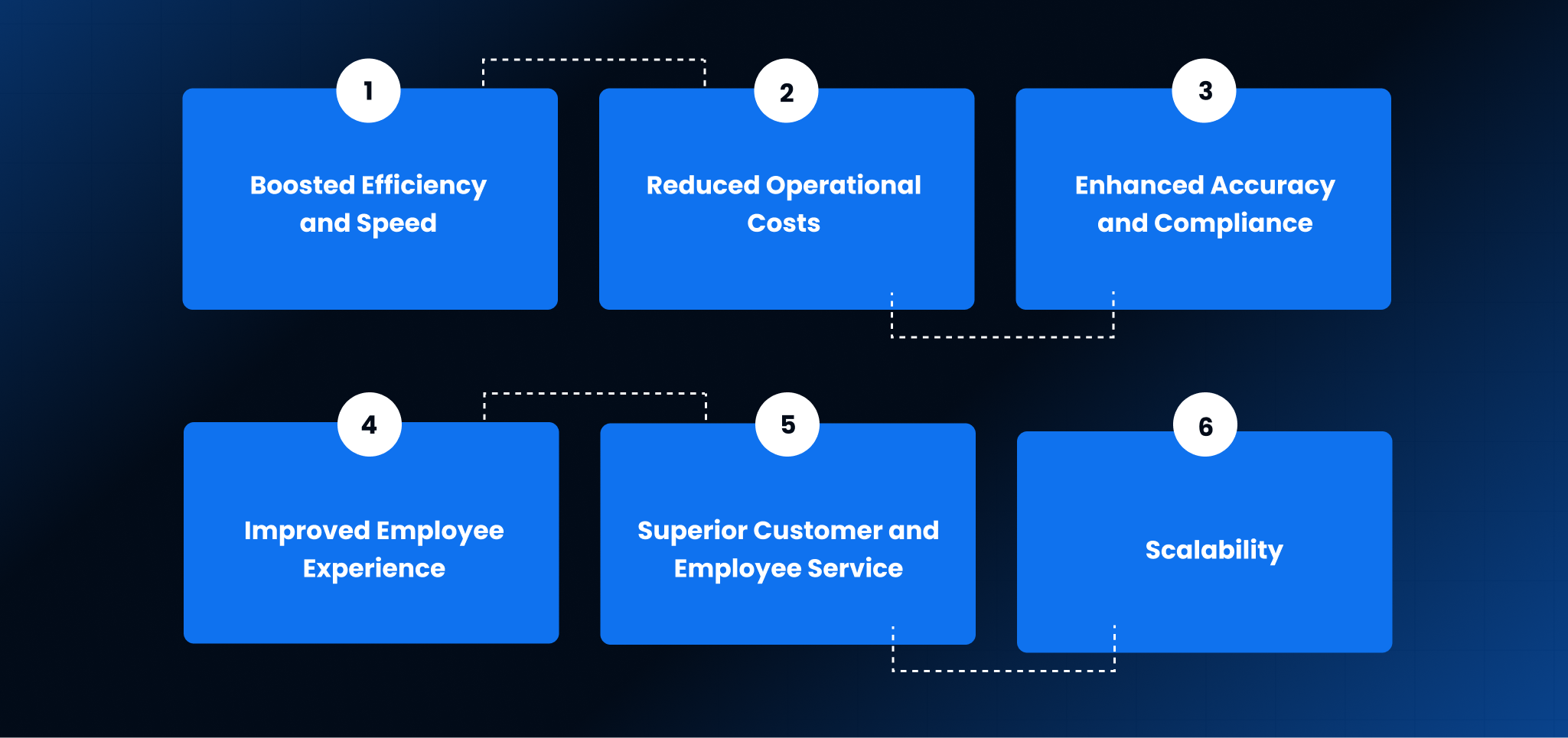
Embracing enterprise automation offers a compelling array of benefits that directly impact the bottom line and operational efficiency for large US companies:
- Boosted Efficiency and Speed: Automation executes tasks far quicker and more accurately than humans, dramatically reducing processing times for everything from approving expenses to resolving IT tickets.
- Reduced Operational Costs: By automating routine tasks, businesses can optimize resource allocation, leading to significant cost savings in the long run.
- Enhanced Accuracy and Compliance: Bots don’t make human errors. This leads to higher data integrity and ensures strict adherence to compliance standards and internal policies.
- Improved Employee Experience: Freeing employees from mundane, repetitive work allows them to focus on more engaging, strategic, and value-added activities, boosting job satisfaction and retention.
- Superior Customer and Employee Service: Faster resolution times and always-on availability lead to happier employees and, in turn, better service for external customers.
- Scalability: Automated processes can easily scale up or down to meet fluctuating demands without the need for extensive hiring or retraining.
Common Use Cases of Enterprise Automation
The applications for enterprise automation are vast and varied, touching nearly every department within a large organization.
Information Technology (IT):
Automating password resets and account unlock requests.
Automated incident triage and routing.
Proactive system monitoring and self-healing.
Software installation and updates.
User provisioning and de-provisioning.
Human Resources (HR):
Streamlining onboarding and offboarding processes.
Automating responses to common HR policy questions.
Managing leave requests and benefits inquiries.
Processing payroll changes.
Finance:
Automated invoice processing and reconciliation.
Expense report auditing and approval.
Fraud detection.
Financial reporting and data aggregation.
Customer Service:
Intelligent routing of customer inquiries.
Automated responses to frequently asked questions.
Personalized customer outreach.
Challenges in Implementing Enterprise Automation
While the promise of enterprise automation is compelling, its successful implementation isn’t without hurdles. Understanding these challenges upfront can help CIOs and CTOs navigate the journey effectively:
- Initial Investment: The upfront cost for automation software, integration, and training can be substantial. However, this is often quickly recouped through long-term savings and increased efficiency.
- Integration with Legacy Systems: Many large enterprises operate with older, deeply entrenched systems. Integrating modern automation platforms with these legacy architectures can be complex.
- Change Management: Employees may feel apprehensive about automation, fearing job displacement. Effective communication and retraining programs are crucial for winning buy-in.
- Process Identification: Pinpointing the right processes to automate, and ensuring they are well-defined and standardized, is a critical first step that sometimes gets overlooked.
- Scalability and Governance: As automation initiatives grow, maintaining oversight, ensuring security, and scaling solutions across various departments requires robust governance frameworks.
Enterprise Automation vs. Traditional Manual Processes
The contrast between enterprise automation and traditional manual processes is stark, particularly when viewed through the lens of a large, complex organization.
| Feature | Traditional Manual Processes | Enterprise Automation |
| Speed | Slow, dependent on human availability | Instantaneous, 24/7 |
| Accuracy | Prone to human error, inconsistencies | Highly accurate, consistent |
| Cost | High labor costs, potential for rework | Lower operational costs over time |
| Scalability | Limited by headcount and training | Highly scalable, adapts to demand |
| Employee Focus | Repetitive, low-value tasks | Strategic, high-value activities |
| Compliance | Manual checks, risk of oversight | Built-in rules, automatic audit trails |
| User Experience | Delays, potential for frustration | Swift resolution, always-on support |
How Leena AI Enables Enterprise Automation
This is where a pioneering platform like Leena AI truly shines, especially with its focus on Agentic AI in IT. Leena AI’s approach to enterprise automation goes beyond simple chatbots, leveraging advanced AI agents that don’t just answer questions, but actively resolve issues end-to-end.
Leena AI empowers large enterprises by providing a comprehensive AI agent that understands context, anticipates needs, and executes actions across IT, HR, and Finance. Instead of merely deflecting tickets, our AI agents are designed for autonomous resolution, proactively tackling common employee queries and issues.
Imagine an employee needing access to a specific software tool. Instead of opening a ticket and waiting for IT, the Leena AI agent understands the request, verifies permissions, and automatically provisions access. If a more complex issue arises, the agent collects all necessary information and seamlessly hands it off to the right human expert, equipped with a full context of the interaction.
This means:
- Faster Resolution: Our AI agents resolve up to 70% of common IT, HR, and Finance queries instantly, reducing the burden on your support teams.
- Enhanced Employee Experience: Employees get immediate, personalized support, leading to higher satisfaction and productivity.
- Operational Efficiency: Your IT, HR, and Finance teams are freed from repetitive tasks, allowing them to focus on strategic initiatives and complex problem-solving.
- Seamless Integrations: Leena AI integrates effortlessly with existing enterprise systems, whether it’s ServiceNow for IT, Workday for HR, or SAP for Finance, ensuring a unified automation strategy.
Leena AI is setting the standard for the next generation of enterprise automation, creating value by transforming how employees interact with internal support, ultimately making your organization more agile and efficient.
Future of Enterprise Automation in Organizations
Looking ahead to 2025 and beyond, the trajectory of enterprise automation is clear: it will become even more intelligent, pervasive, and integrated. We foresee several key trends shaping its future:
- Hyperautomation Dominance: The combination of various automation technologies (AI, RPA, machine learning, process mining) will converge to automate nearly every conceivable business process, creating truly self-managing enterprises.
- Generative AI for Proactive Problem Solving: Generative AI will move beyond content creation to dynamically analyze system logs, predict potential outages, and even generate remediation code or steps, effectively preventing issues before they occur.
- Human-Centered Automation: While automation handles the routine, the focus will shift to augmenting human capabilities. AI will serve as a co-pilot, providing insights, suggesting solutions, and enabling employees to perform at their best.
- Emphasis on Ethical AI and Governance: As AI agents gain more autonomy, robust governance frameworks, ethical guidelines, and transparent AI models will become paramount to ensure fairness, security, and accountability.
- Wider Adoption of Agentic AI: AI agents, capable of independent decision-making and action execution, will become standard across IT, HR, and Finance, revolutionizing internal service delivery.
The future of enterprise automation promises a landscape where organizations are more resilient, responsive, and innovative, driven by intelligent systems that work tirelessly behind the scenes.
Frequently Asked Questions
What is the primary goal of enterprise automation?
The primary goal of enterprise automation is to optimize business processes, reduce manual effort, enhance efficiency, and improve service delivery across an entire organization using advanced technologies like AI and RPA.
How does enterprise automation benefit large US companies specifically?
For large US companies, enterprise automation offers significant benefits such as reducing high operational costs, streamlining complex compliance requirements, scaling operations efficiently across diverse departments, and improving employee satisfaction in a competitive job market.
Is enterprise automation only for IT departments?
Absolutely not! While IT often leads the charge, enterprise automation extends far beyond IT. It has profound applications in HR for onboarding, Finance for invoicing, and even customer service for inquiry resolution, benefiting all aspects of a business.
What's the difference between enterprise automation and simple task automation?
Simple task automation focuses on individual, repetitive tasks. In contrast, enterprise automation involves an end-to-end strategy to automate complex, multi-step processes across various departments, often using multiple integrated technologies to achieve broader organizational goals.
How can a CIO start implementing enterprise automation in their organization?
A CIO can begin by identifying high-volume, repetitive processes in departments like IT, HR, or Finance. Then, they should assess available automation technologies, consider a pilot program, and choose a strategic partner like Leena AI that offers robust, scalable AI agents for effective enterprise automation.
Want To Know More?
Book a Demo
I'm the B2B Marketing guy for the best AI-driven product companies. I'm currently aboard the rocket ship that is Leena AI.. As a Marketing leader, I lead the Brand Marketing, Content Marketing, Analyst Relations, Product Marketing, Webinars and Podcasts.
Pick your next stop
Hand-picked next reads — short on filler, long on what matters.
 Published 23 October, 2026
Publish your failure rate: why we benchmark before we ship
 Mayank Kapoor
 Published 21 October, 2026
What IBM Ventures’ Investment in Leena AI Really Means
 Sayan Haldar
 Published 16 October, 2026
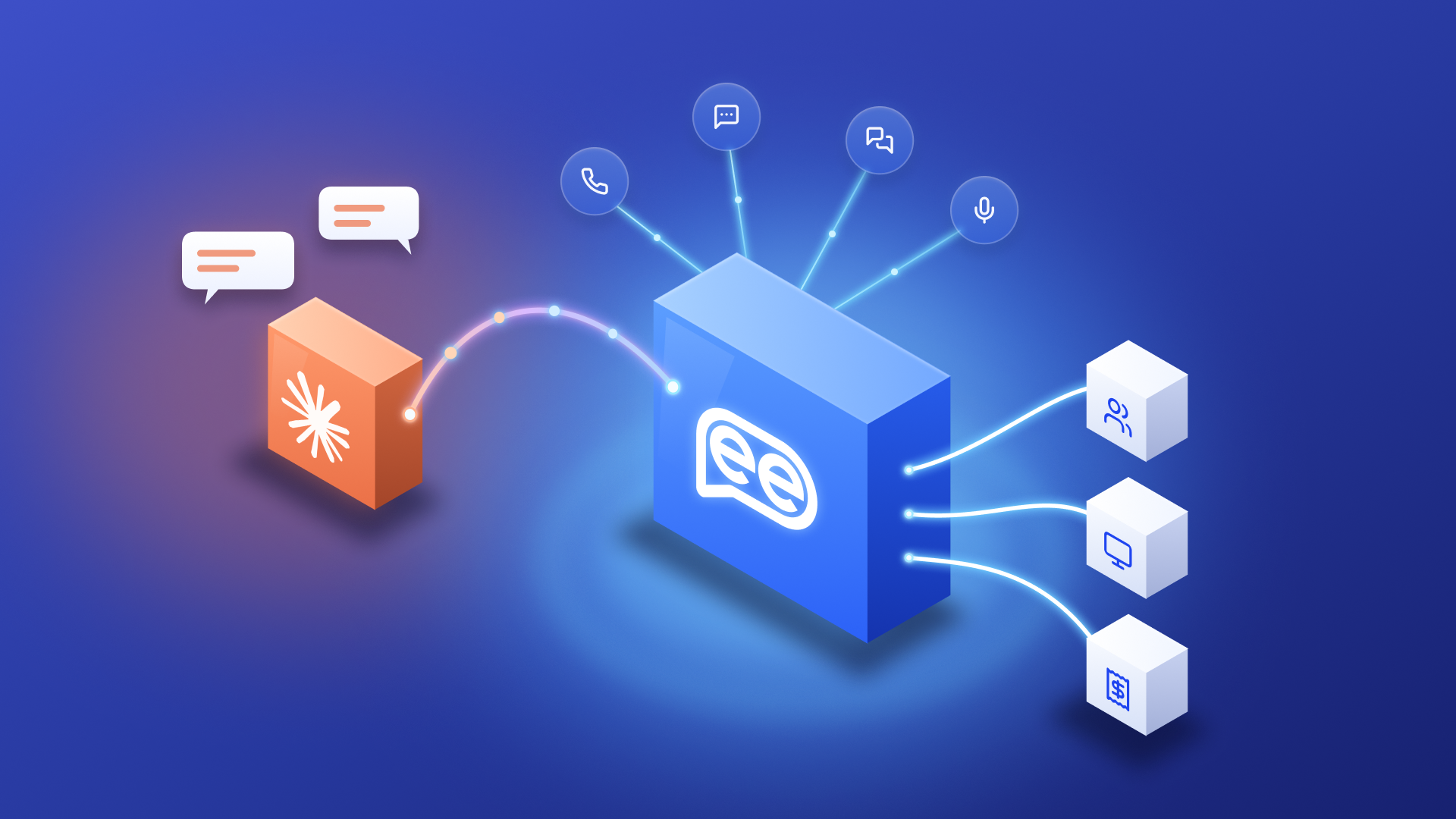
“We already have Claude. Why do we need Leena AI?”
 Abhishek Tayal
 Published 30 September, 2026
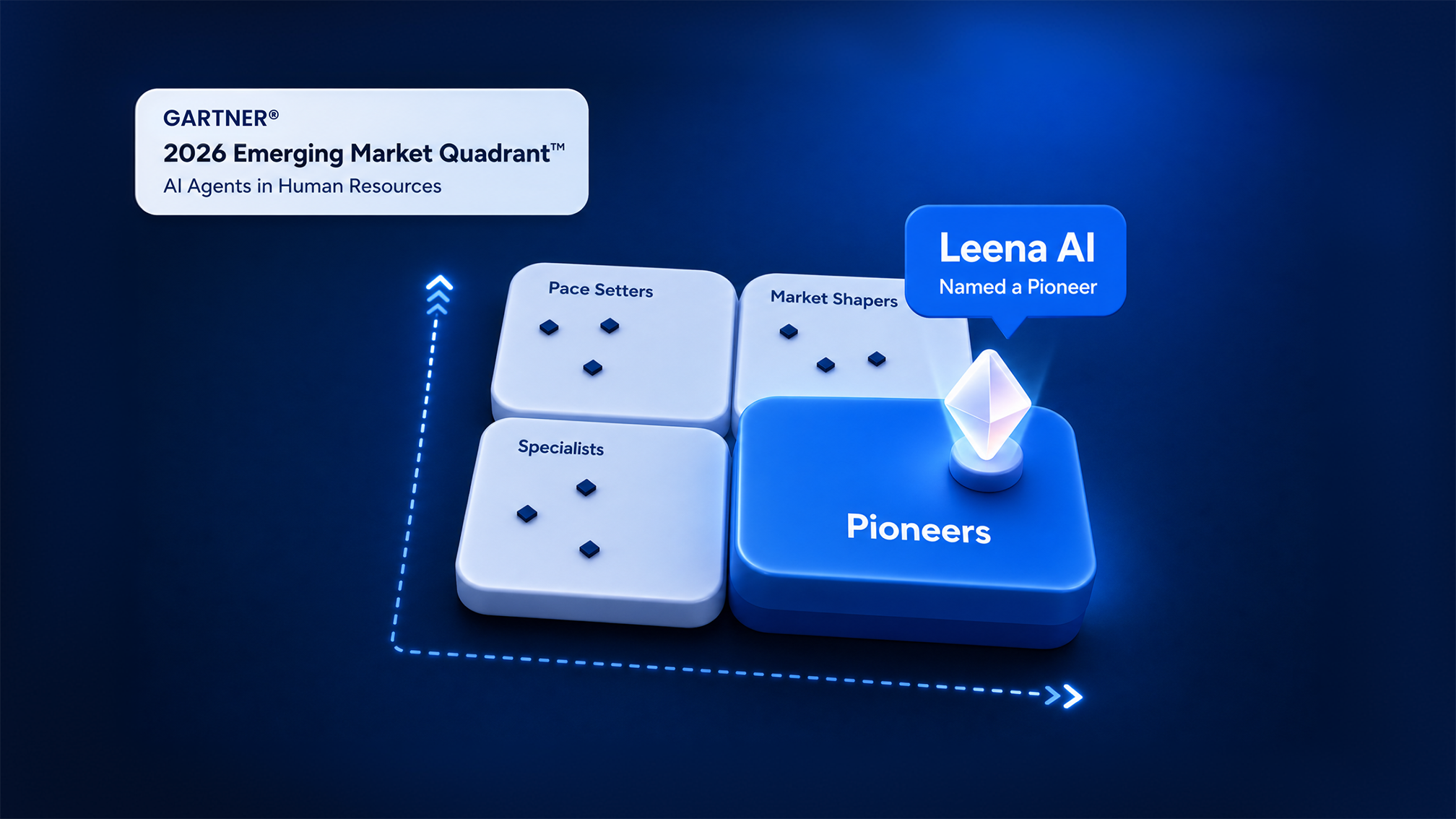
Leena AI named a Pioneer in the Gartner® Emerging Market Quadrant™ for AI Agents in Human Resources
 Tarun Bhatti
 Published 18 September, 2026
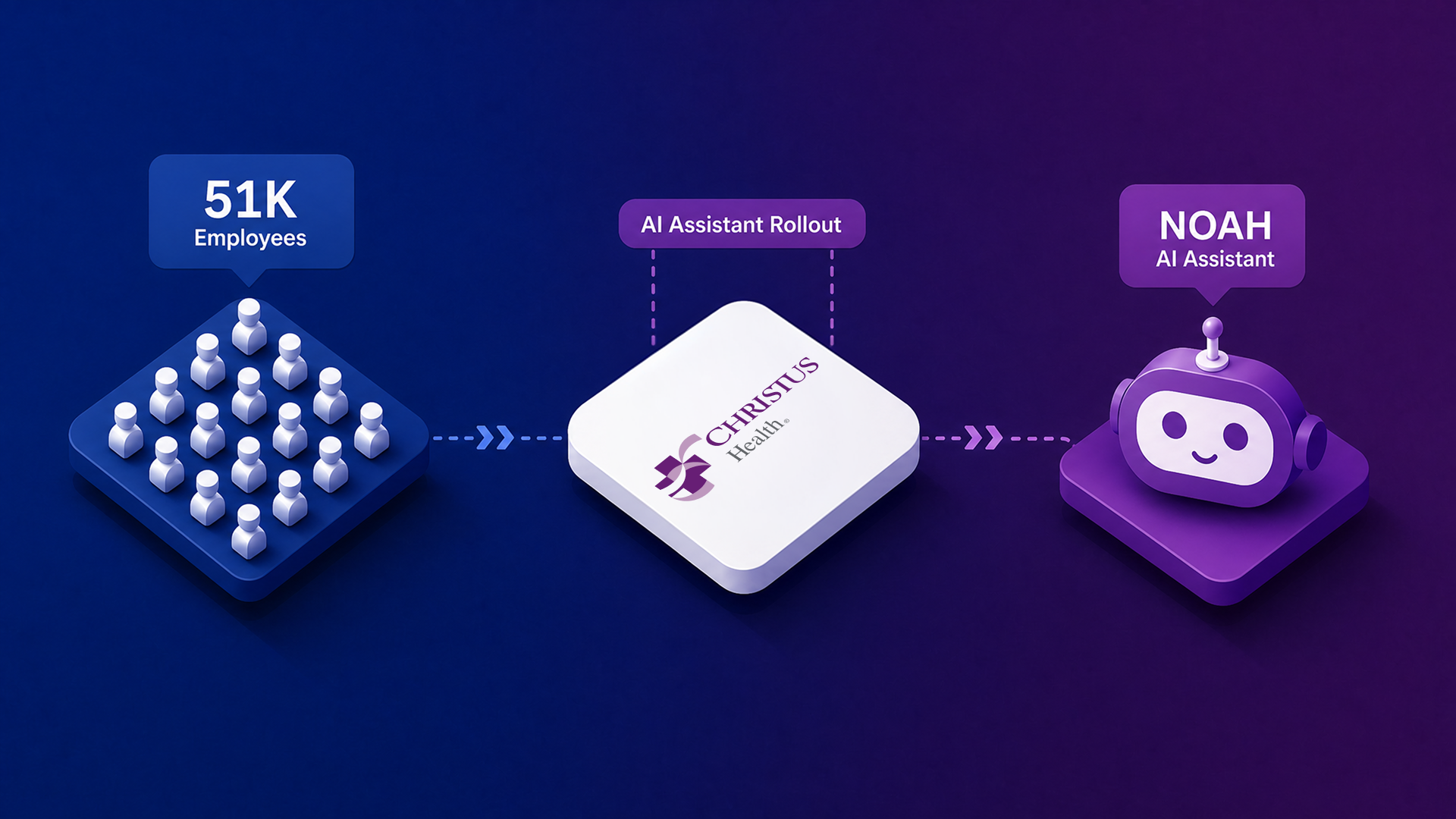
How CHRISTUS Health rolled out an AI assistant to 51,000 associates
Tarun Bhatti Published 28 January, 2026
AI and Automation: The 2026 Standard for Enterprise Efficiency
 Prashant Sharma